
How a Leading Rail OEM Cut Composite Cure Validation from 15 Days to 1
A leading global rail-transportation OEM replaced multi-week autoclave validation trials with one continuous test — capturing $284K in direct annual savings (142% ROI, …
Premier ESR combines the capabilities of a DMA, DSC and rheometer in one instrument. You get dynamic mechanical properties, thermal transitions like Tg and Tm, and viscosity behavior in one test, on one sample, with virtually no cleanup.
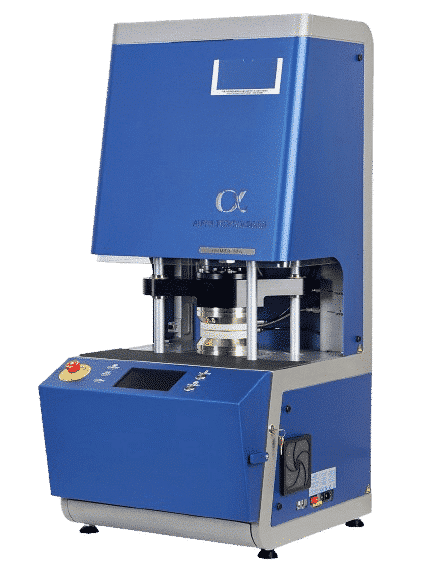
DMA, DSC and rheometer capabilities in one instrument
Maximum test temperature, up from the standard 230 °C
Stacked prepregs up to 4 mm thick
Cure measurement for resins and prepregs
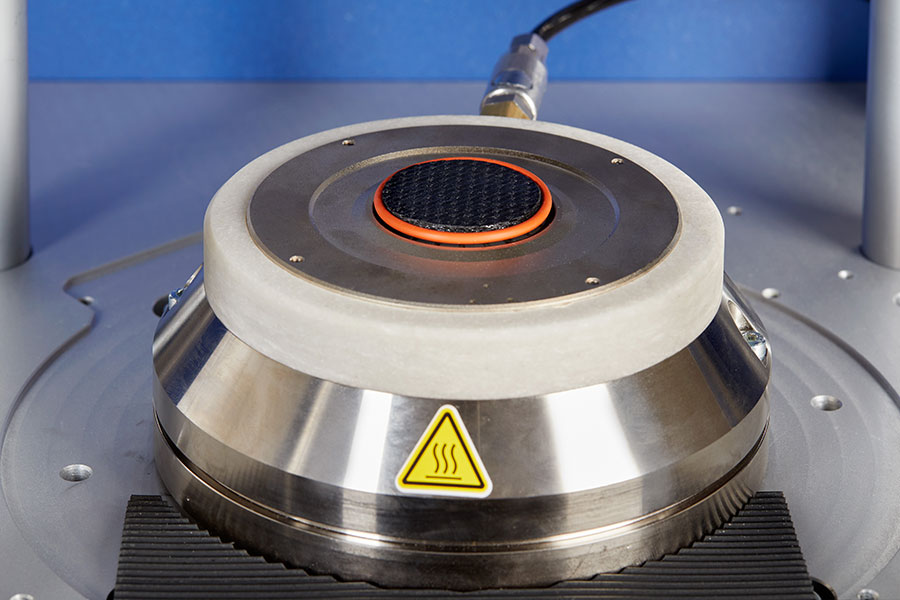
Premier ESR is designed for the next wave of high-performance materials. It handles everything from neat resins and plastic pellets to stacked prepregs, and its easy sample preparation and high throughput suit both fast-paced production labs and teams developing new composites and plastics.
Take a closer look at the ESR design, controls and workflow in our interactive virtual demo — no appointment needed.
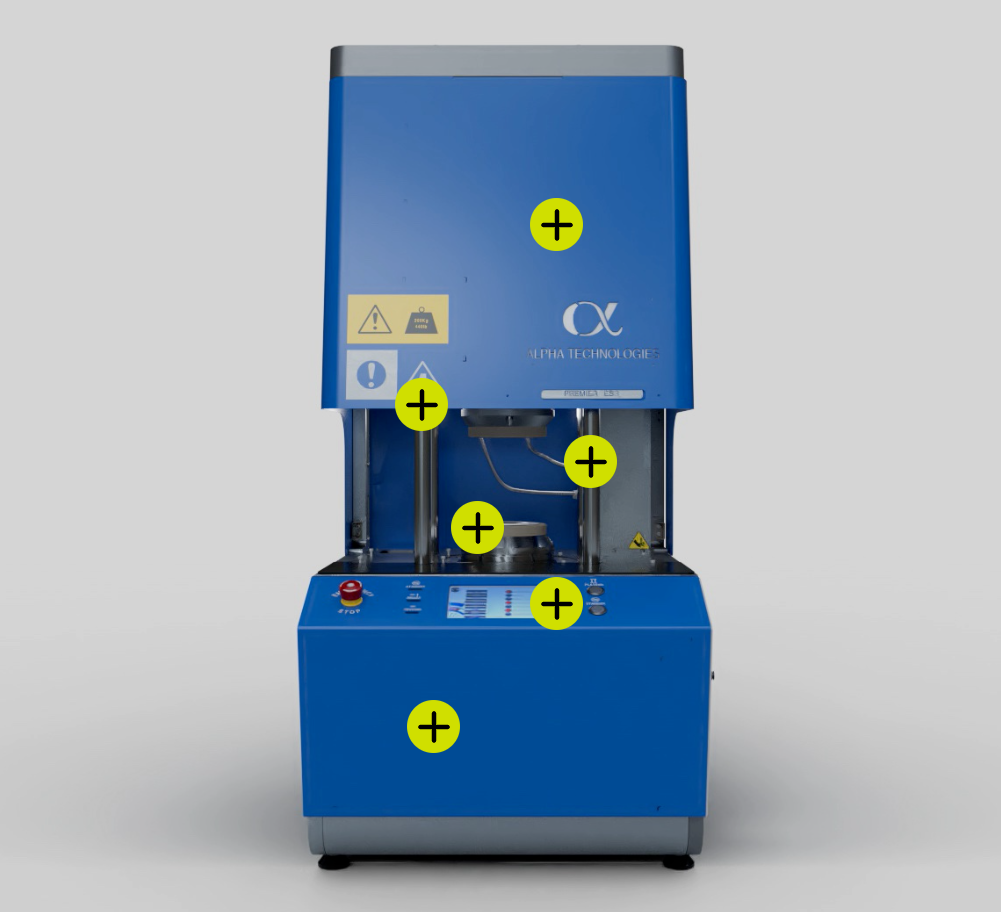
Because ESR samples are made from the same material as your finished part, the test can follow your real process — and give you data you can act on.
Run isothermal or non-isothermal temperature programs to compare formulations, batches or levels of aging with precision.
Run the same temperature program as your process in real time. Testing alongside long production cure cycles helps confirm complete cure in less time.
The cured ESR coupon can be retained for further testing, including DMA, TMA and proof of cure state in the part.
Many companies offer expensive, technically complex DMA instruments with long test times. Premier ESR is a cost-effective way to cure composite materials under any cure cycle — and measure gel, cure and final physical properties under those same conditions.
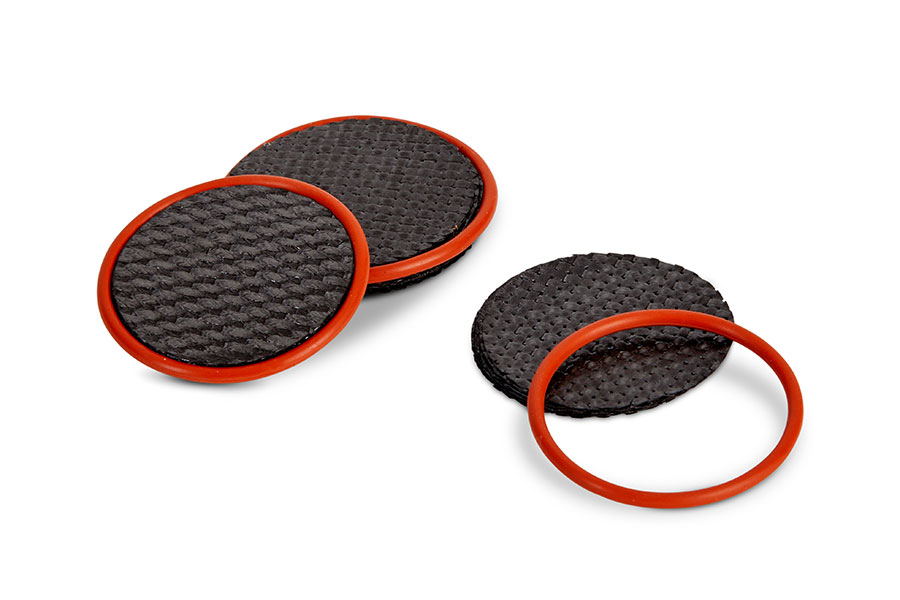
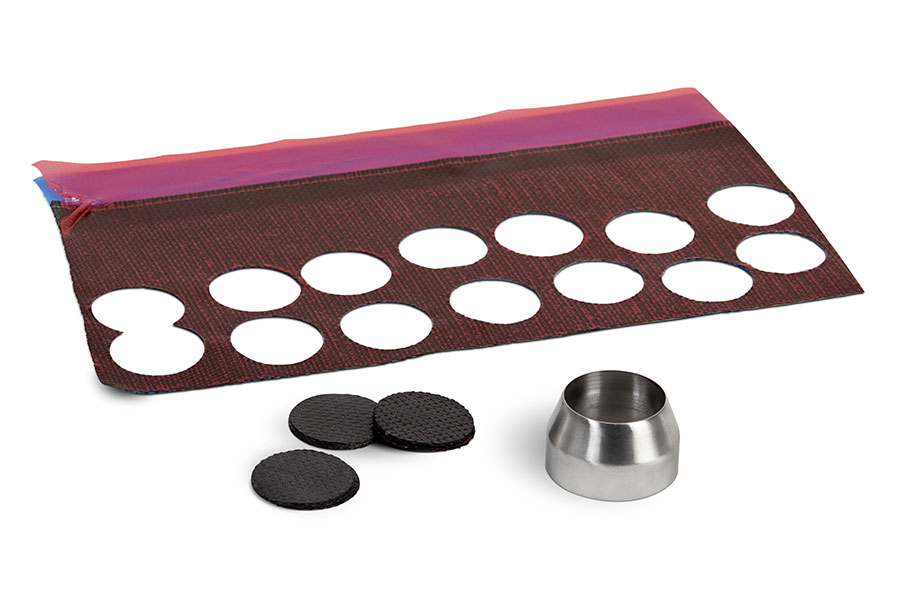
Pressurization holds the sample in place, enabling measurement of unidirectional laminates and optimization of cure profiles.
Precise temperature control for highly exothermic reactions — key to determining state of cure and optimum viscosity.
Workbench manages the instrument while Online Manager analyzes data. Review results without waiting for the test to finish.
Controlled platen pressure keeps the sample positioned as the dies close.
Replace the RPA’s biconical dies and are essential for testing very hard materials.
Accounts for transducer compliance to extend the range to very high modulus materials after cure.
Maintains a constant resin-to-fiber ratio and improves repeatability.
A patented die option designed specifically for thermoplastic testing.
The standard for measuring cure and cure times from viscoelastic properties of resins and prepregs.
Extends testing from the standard 230 °C up to 350 °C.
Further reading: “Improving the Measurement of Prepreg Viscosity, Gel and Cure Using an Encapsulated Specimen Rheometer,” by Alpha rheology fellow H. Pawlowski, SAMPE North America 2017 Conference, Seattle.
Every Premier ESR includes the engineering that makes the whole Premier line faster, more stable and easier to use.
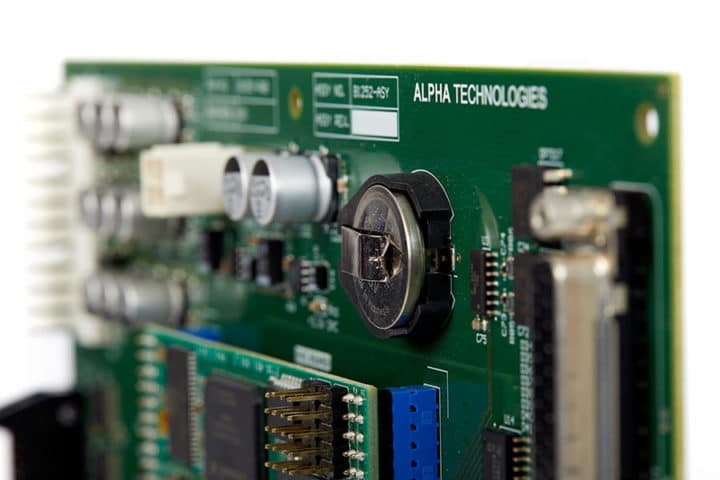
Custom Electronics that are matched to the instrument. Better control. Better resolution. Other Process Analyzers use off-the-shelf PLCs to save money, but can’t fine-tune their electronics to their instrument – often overshoot set points then spend valuable time stabilizing.
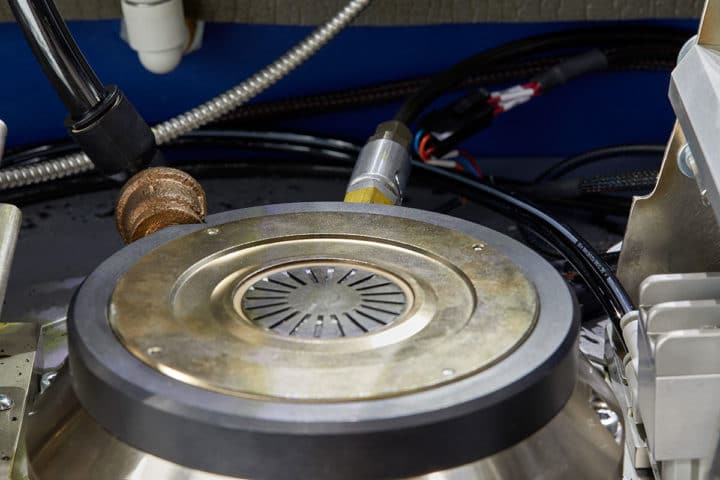
Efficient die cooling that gets your instrument ready for the next test. Why wait 20 minutes for dies to cool down when Premier instruments take about 6 minutes. (And our instruments are smart enough to know when the instrument reaches the right temperature. Others, not so much.)
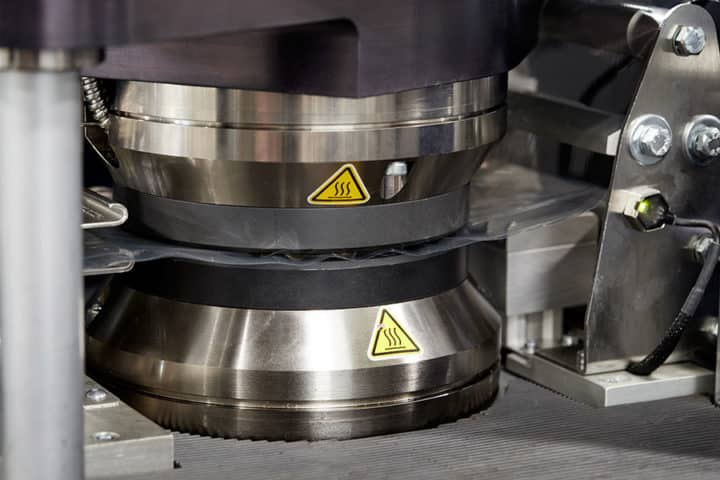
Because they are designed specifically for Premier instruments, our heating control system ramps up heating cycles faster and maintains control for more accurate cure times and more efficient production.
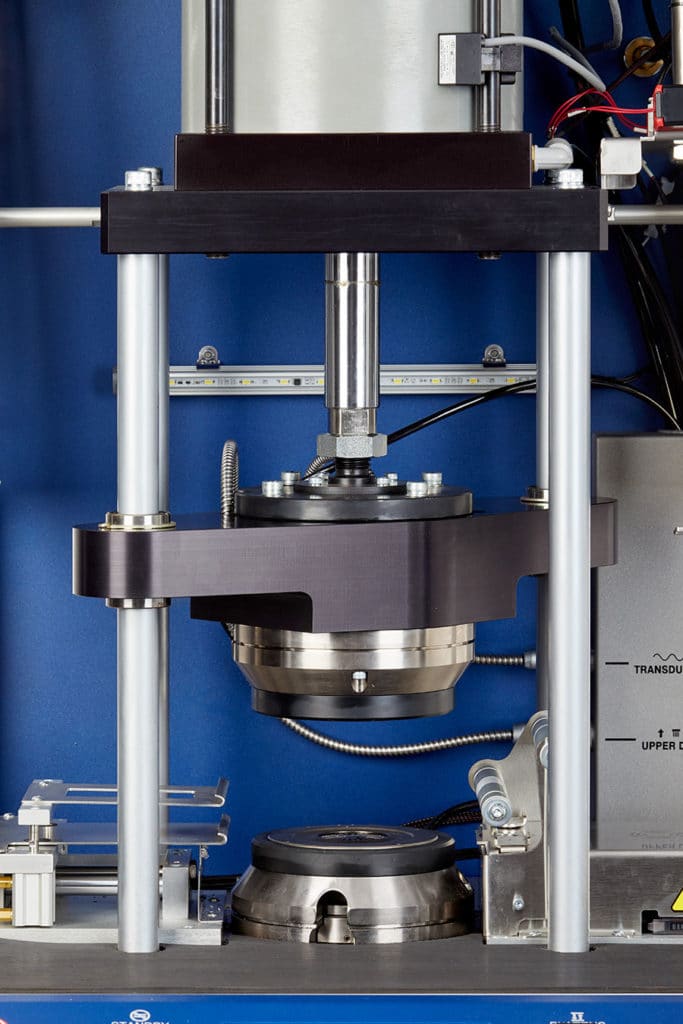
More accurate measurements. No loss of signal thanks to Premier’s Smart Alignment and Dynamic Symmetry. On-target, parallel die closing, high stiffness and constant closing force.
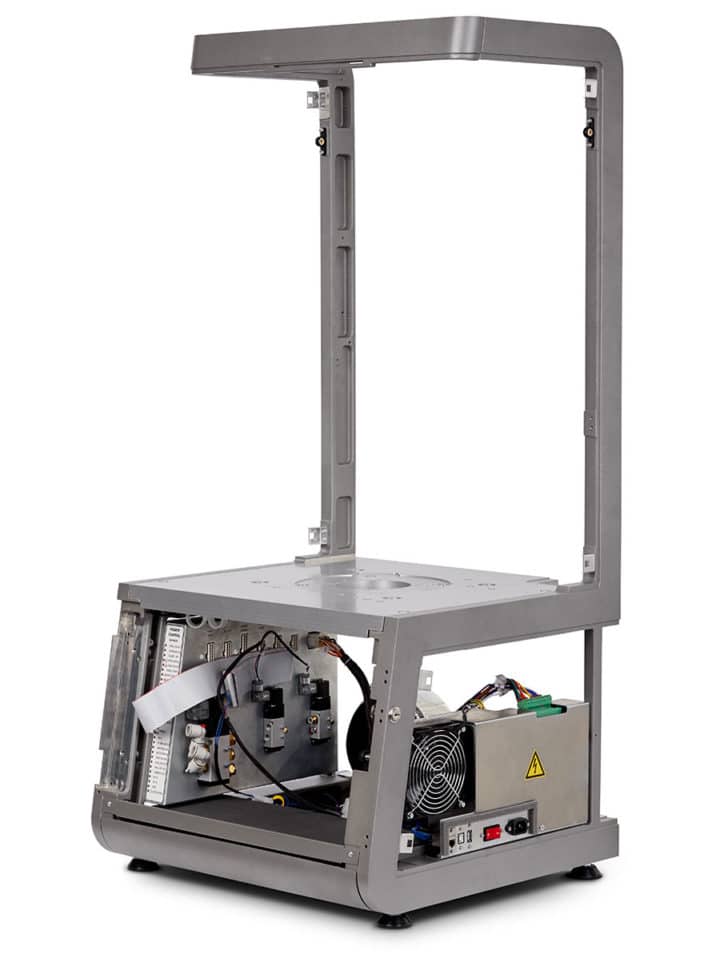
Work smarter not harder with lighter, cast aluminum frames. Not only are Premier frames light, but incredibly stiff for less variability. What’s more, Premier instruments incorporate frame compliance into the calibration for better data.
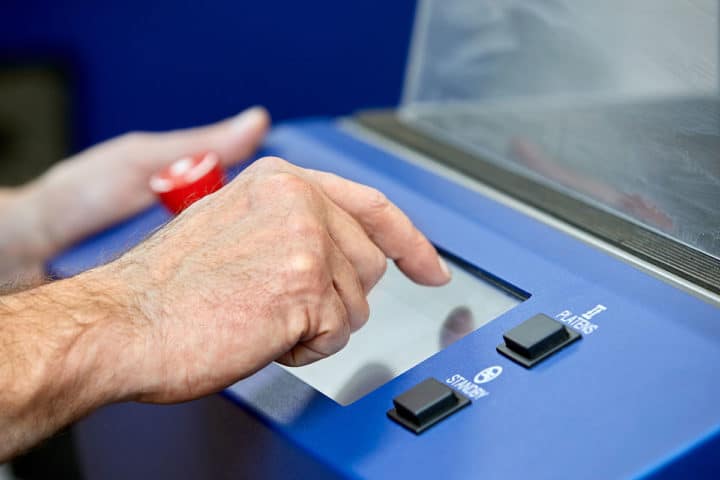
Our incredibly intuitive user interface comes to you through a large, bright, touch screen panel that lets you navigate to the view you want or the information you need, fast and easy.
Premier ESR covers a broad range of temperature, strain, frequency and time, so you can characterize a material from flow through gel, cure and final properties.
| Heating Rate: | 0.36 °F/min. (0.20 °C/min.) to 90 °F/min. (50 °C/min.) |
| Max Cooling Rate: | 54 °F/min. (30 °C/min.) |
| Measurements: | Torque (S’, S”, S*), Tan(Delta), Dynamic Viscosity (η’, η”, η*), Shear Modulus (G’, G”, G*), Temperature (°C or °F), Strain (degrees, %, fractional strain), Frequency (cpm, Hz, radians/ sec), Pressure (kPa, psi) |
| Electrical: | 100/110/120/130 VAC ±10%, 60 ±3 Hz, 20 amp single phase 200/220/240/260 VAC ±10%, 50 ±3 Hz, 10amp single phase |
| Air Pressure: | 80 psi (5.6 kg/cm) 2551 kPa minimum |
| Dimensions: | W: 22 in (56 cm), H: 48 in (122 cm), D: 25 in (64cm) |
| Weight: | Net 346 lb (157 kg), gross 616 lb (280 kg) |
| Sample Cavity: | 3.5 ccm |
| Sample Dimensions: | 41 mm in Diameter, 2.6 mm Nominal Thickness |
| Temperature Range: | Ambient to 662 °F (350 °C) |
A leading global rail-transportation OEM replaced multi-week autoclave validation trials with one continuous test — capturing $284K in direct annual savings (142% ROI, …
Polymer scientists and product engineers have long relied on standard techniques like Differential Scanning Calorimetry (DSC) and Dynamic Mechanical Analysis (DMA) to pinpoint …
When working with polypropylene (PP), small adjustments to chemistry can shift thermal behavior dramatically. Engineers and formulators need to know exactly how ethylene …
In most labs, developing a full thermal and rheological profile for polypropylene (PP) samples means coordinating between three instruments, multiple operators, and a …
Alpha Technologies evaluated the influence of processing parameters on the rheological behavior and mechanical properties of prepreg composites using an Encapsulated Sample Rheometer …
Alpha Technologies evaluated the influence of processing parameters on the rheological behavior and mechanical properties of prepreg composites using an Encapsulated Sample Rheometer …
Alpha Technologies evaluated the influence of processing parameters on the rheological behavior and mechanical properties of prepreg composites using an Encapsulated Sample Rheometer …
The Future of Thermoset Testing: A Look at the Latest Developments Review selected studies that were completed on epoxy prepreg systems utilizing ESR …
The latest articles, white papers and application notes on Premier ESR testing.
A leading global rail-transportation OEM replaced multi-week autoclave validation trials with one continuous test — capturing $284K in direct annual savings (142% ROI, …
Polymer scientists and product engineers have long relied on standard techniques like Differential Scanning Calorimetry (DSC) and Dynamic Mechanical Analysis (DMA) to pinpoint …
When working with polypropylene (PP), small adjustments to chemistry can shift thermal behavior dramatically. Engineers and formulators need to know exactly how ethylene …
In most labs, developing a full thermal and rheological profile for polypropylene (PP) samples means coordinating between three instruments, multiple operators, and a …
Collect, analyze and share test data across instruments, labs and plants in one secure system.
Work with Alpha’s application specialists to design test methods for your materials and process.
Keep your ESR accurate and audit-ready with factory-trained calibration and service.
Get a quote today and discover how Alpha’s rheology instruments, dedicated support and 60+ years of specialized expertise can advance your materials testing.