
In this article we’ll examine out-time and how it can affect the curing process, storage modulus, and other rheological properties.
- Alpha tested five out-time durations: 0, 3, 6, 9 and 12 days
- Out-time increased storage modulus, largely because of resin “advancement,” or premature curing
- Nine days was the optimum for this prepreg, with the shortest initiation and termination intervals
- Longer out-times raise the risk of moisture absorption and chemical change in the resin
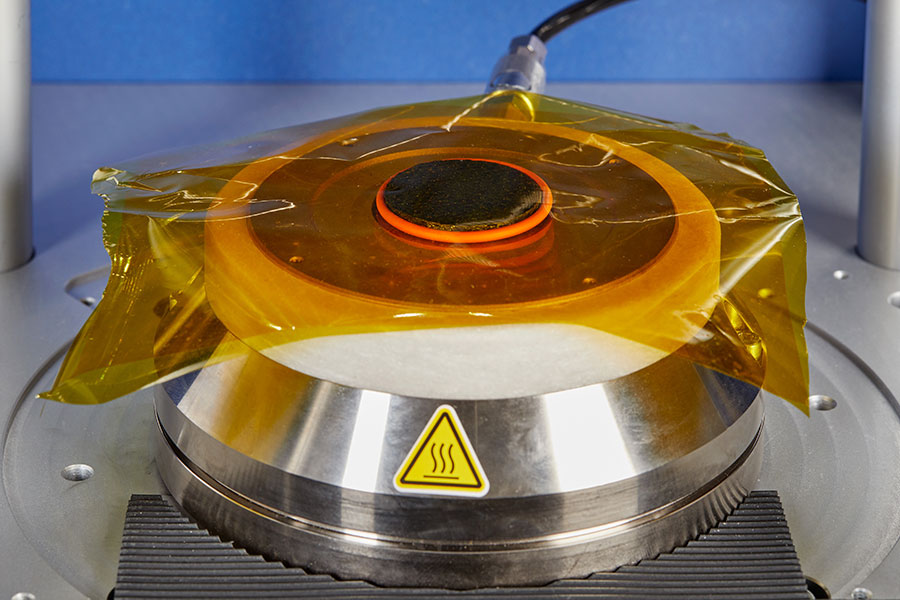
Alpha Technologies evaluated the influence of processing parameters on the rheological behavior and mechanical properties of prepreg composites using an Encapsulated Sample Rheometer (ESR). The parameters included cure temperature, ramp rate and out-time.
This is the last in a three-article series exploring the results of this study and the role of Alpha’s Premier ESR® in advancing a company’s process optimization goals for their prepreg materials. To learn more about the other key processing parameters we studied, download the full study.
Understanding Out-Time in Prepreg Processing
Some prepreg materials spend a period of time exposed to ambient conditions before curing or use. This period is called out-time and it can have a significant impact on the curing process, storage modulus, and other rheological properties, all of which ultimately affect the performance and quality of the final prepreg material.
Alpha Technologies tested five different out-time durations: 0 days, 3 days, 6 days, 9 days, and 12 days. The most important parameter studied in relation to out-time was storage modulus. Storage modulus is essentially a measurement of a prepreg material’s stiffness or solidity. More specifically, storage modulus quantifies how well the prepreg material can elastically store and recover energy when deformed. The ratio of loss modulus to storage modulus is also important when evaluating the balance of elasticity and viscosity in a prepreg material.
Out-time durations tested
Baseline
Tested
Tested
Optimum
Tested
Advancement Raises Storage Modulus
The study discovered enhanced storage modulus in prepreg samples that were exposed to ambient conditions, as opposed to samples that did not experience any out-time. This is largely attributed to the fact that extended out-time contributes to “advancement,” or premature curing, of the resin. Advancement has a beneficial impact on a number of variables:
Flow and impregnation
Viscosity and flow characteristics of the resin and, subsequently, its ability to effectively impregnate the fibers during cure.
Cure kinetics
Cure kinetics and decreased duration of initiation and termination intervals.
As always, striking a balance is key to optimizing outcomes. While the study revealed an overall positive correlation between out-time and storage modulus, the ideal out-time for this particular prepreg material appears to be nine days, rather than twelve. Nine days yielded the shortest initiation and termination intervals and a superior storage modulus compared to twelve days.
Moisture absorption
The likelihood of absorbing moisture rises with longer out-times. Moisture has an adverse effect on curing, leading to voids, weak bonding areas, and other defects that compromise structural integrity.
Chemical change
Prolonged air exposure can change the chemical structure of the resin, which also affects curing dynamics and mechanical properties.
Troubleshooting Prepreg Failures with the ESR
For a detailed study of common prepreg cure failure modes and how to troubleshoot issues with rheological measurements, download our white paper.