
Building Frequency Temperature Superposition Master Curves
Introduction High Frequency Needs Nowadays, a lot of materials are submitted to repetitive mechanical force or solicitation. For example: some joint polymer part …
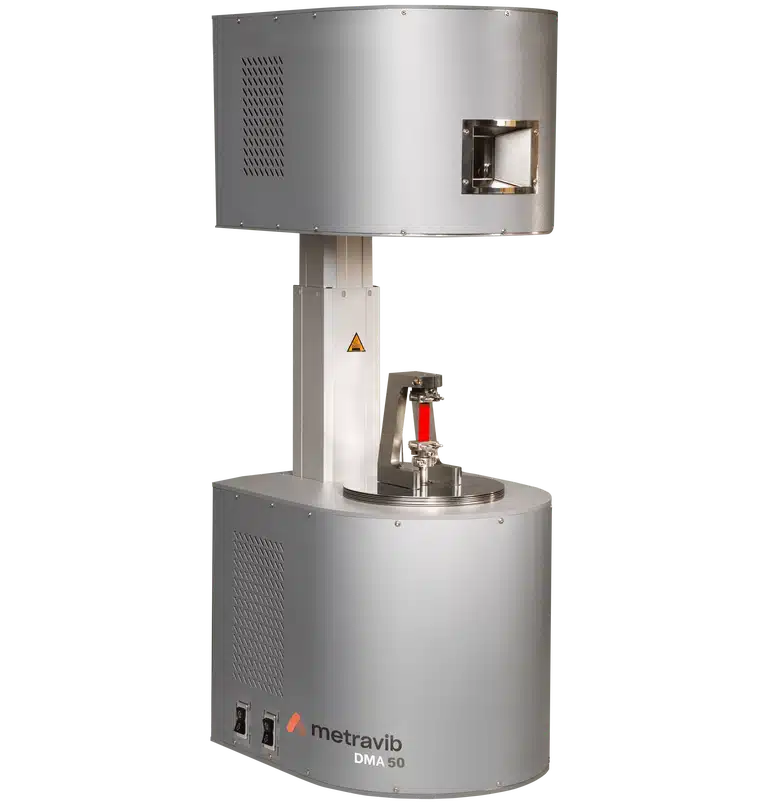
Desktop dynamic mechanical analyzers with a high force range and outstanding flexibility. From glass transition determination to immersed tests, DMA25 and DMA50 are powerful, cost-effective thermomechanical testing platforms.
Maximum dynamic force (DMA50; 50 N for DMA25)
Maximum frequency
Maximum temperature with option; down to −150 °C
Tan delta resolution
DMA25 and DMA50 cover everything from routine DMA to specialized tests, for R&D, quality control, education and lab work.
Viscoelastic characterization, including glass and secondary transitions.
Creep, stress relaxation, tension, compression and more.
Particularly well suited to polymer and composite characterization.
Test materials immersed in a liquid, using all available specimen holders.
Analyze how material properties change with humidity.
A cost-effective platform for research, quality control and teaching labs.
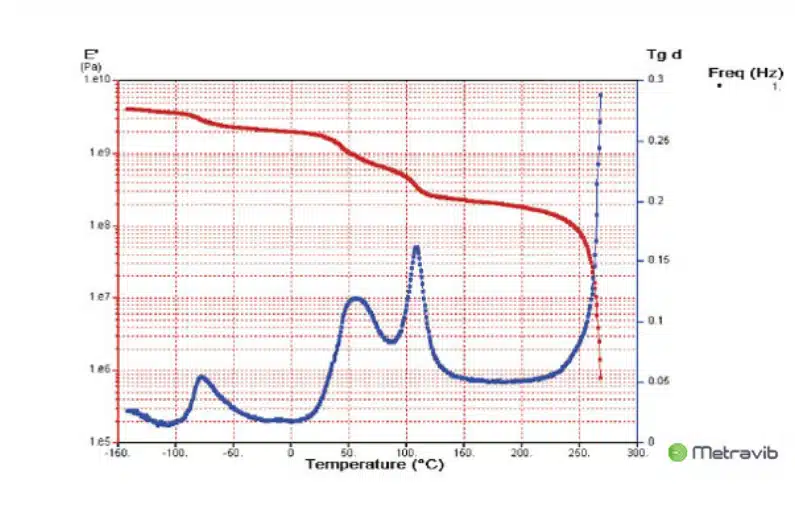
Optimized metrology and innovative dynamic and static control algorithms give DMA25 and DMA50 accurate control of every parameter that affects measurement quality.
A dedicated electrodynamic actuator, designed specifically for DMA, handles changes in mechanical behavior across temperature and lets you test specimens sized to represent the material’s structure, in dynamic or static tests.
Flexible operating modes handle routine DMA tests or custom tests that combine multiple parameters. The mechanical frame can be reversed depending on the test configuration, which is especially useful for immersed tests: you can use every specimen holder, in any test mode, without buying expensive accessories.
Dynamic force: up to 50 N
Dynamic displacement: 6 mm peak to peak
Dynamic force: up to 100 N
Dynamic displacement: 6 mm peak to peak
Modulus range: 10² to 3×10¹² Pa
Size: 1000 × 300 × 400 mm (H × W × D), 40 kg
| Frequency: | Min: 0.00001 Hz Max: 200 Hz |
| Temperature Range: | room to 500 °C option 1: min -150 °C option 2: max. 600 °C |
| Dynamic force | Max: DMA 25 (50N*), DMA 50 (100N*), * peak to peak |
| Dynamic displacement: | 6mm peak to peak |
| Modulus | 1E2 to 3E12 Pa |
| Tan delta resolution | 0.00001 |
| Dimensions | 1000 mm (Height) x 300 mm (Width) x 400 mm (Depth) Weight: 40 kg Power: 230 V single phase |
Introduction High Frequency Needs Nowadays, a lot of materials are submitted to repetitive mechanical force or solicitation. For example: some joint polymer part …
Introduction Dynamic Mechanical Analysis (DMA) is a well-established technique for characterizing the viscoelastic (mechanical) properties of materials and is increasingly used in biomedical …
Introduction To understand the viscoelastic behavior of a material, Dynamic Mechanical Analysis (DMA) is one of the most useful characterization techniques. It helps …
Introduction During polymer manufacturing, molecules often do not have sufficient time to move into the positions or conformations that correspond to the processing …
Introduction Creep is one of the most fundamental and dominant analytical tools used to study material behavior. These measurements help characterize the response …
Introduction Errors in the conception of composite materials can lead to disappointing mechanical properties. DMA is a powerful tool for determining the properties …
The latest articles, white papers and application notes on dynamic mechanical analysis.
Introduction High Frequency Needs Nowadays, a lot of materials are submitted to repetitive mechanical force or solicitation. For example: some joint polymer part …
Introduction Dynamic Mechanical Analysis (DMA) is a well-established technique for characterizing the viscoelastic (mechanical) properties of materials and is increasingly used in biomedical …
Introduction To understand the viscoelastic behavior of a material, Dynamic Mechanical Analysis (DMA) is one of the most useful characterization techniques. It helps …
Introduction During polymer manufacturing, molecules often do not have sufficient time to move into the positions or conformations that correspond to the processing …
Direct viscoelastic measurement from 100 Hz to 10 kHz, with a sweep in about 5 minutes.
DMA+300, DMA+1000 and DMA+2000, with dynamic forces up to 2000 N.
Automated specimen handling to run DMA+ test campaigns around the clock.
Get a quote today and discover how Alpha and Metravib’s dynamic testing instruments, dedicated support and specialized expertise can advance your materials testing.