
Building Frequency Temperature Superposition Master Curves
Introduction High Frequency Needs Nowadays, a lot of materials are submitted to repetitive mechanical force or solicitation. For example: some joint polymer part …
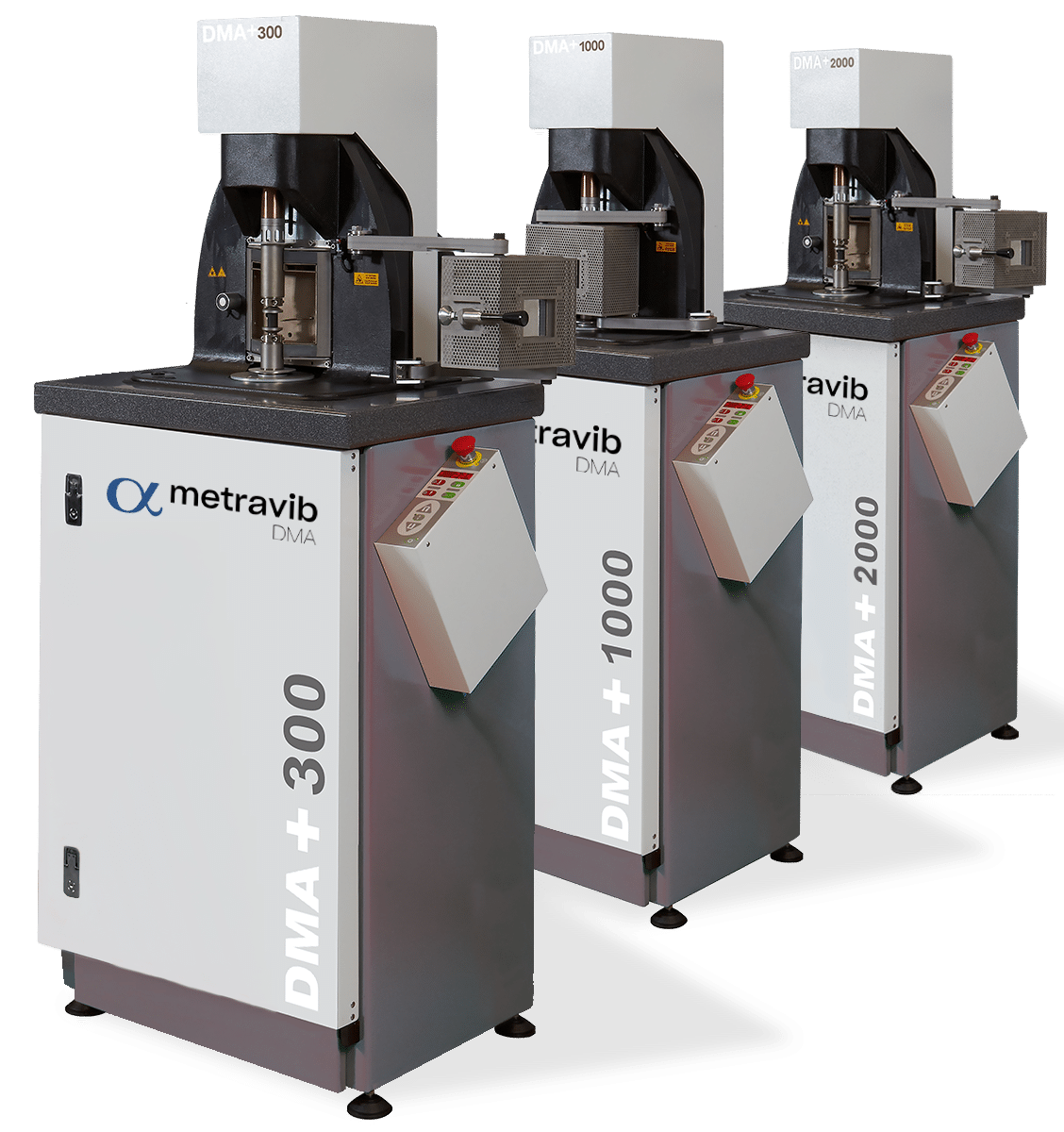
Built on a one-piece, high-rigidity test frame, the DMA+ series delivers the widest stiffness and frequency analysis ranges for accurate viscoelastic analysis of advanced materials, with first-class ergonomics.
Maximum dynamic force (DMA+2000)
Maximum frequency, 1000 Hz optional
Maximum temperature, down to −150 °C with cryogenic option
Dynamic displacement resolution
Analyze solid, pasty and liquid materials — elastomers, plastics, composites, biomaterials and more — for R&D, quality control, education and lab work.
Precise DMA measurement of viscoelastic properties, including glass and secondary transitions.
Creep, stress relaxation, tension and compression testing on the same frame.
Fatigue testing with controlled waveforms on material and industrial component specimens, plus crack growth testing.
Mullins effect, Payne effect, frequency sweeps, Heat Build-Up and crack growth.
Follow polymerization, run simultaneous DMA/calorimetry and characterize fatigue behavior.
Analyze humidity dependence and compare and classify complex materials for design engineering.
The DMA+ one-piece, high-rigidity test frame is designed to give you the largest stiffness and frequency analysis ranges, so you can accurately characterize the most advanced materials.
Dyna+ software supports an extended variety of DMA tests to follow how viscoelastic properties depend on many parameters. Add the optional Fatigue module to extend testing into enhanced fatigue, Heat Build-Up and crack growth.
Add-on modules and automation that expand what your DMA+ can do.
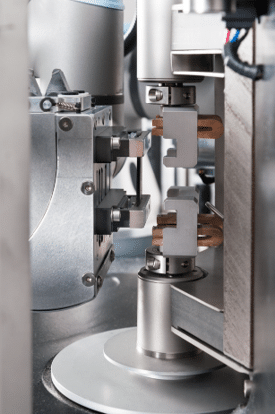
Resistance to fatigue, ageing and crack growth is critical for rubber. Most commercial methods only measure time to failure. Building on work with tire industry leaders since 1999, Metravib’s module brings quantitative, productive crack growth testing to rubber R&D.
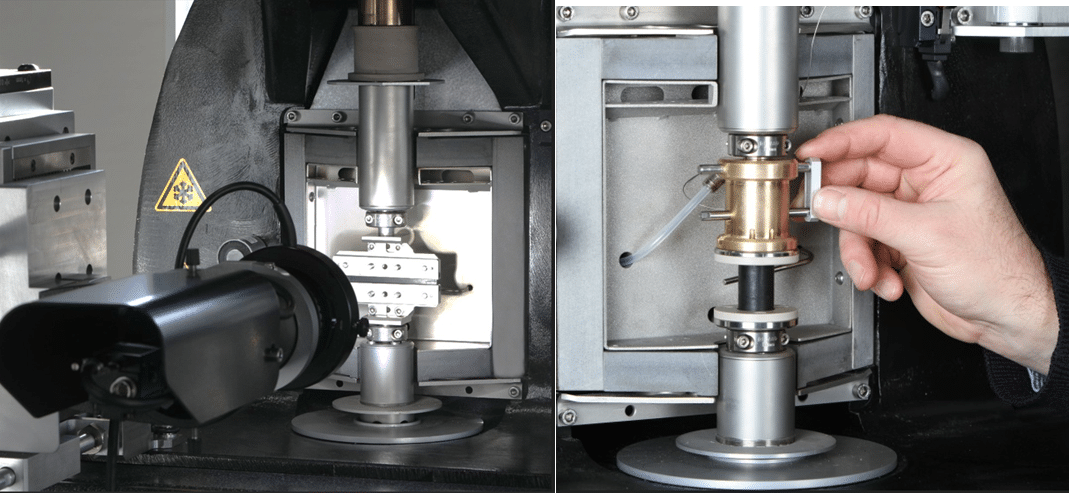
Temperature rise is the principal cause of rubber degradation and can lead to fatigue cracking. The HBU module analyzes how compounds respond to repeated mechanical excitation under multiple parameters — a key design check for tires, belts and vibration mounts.
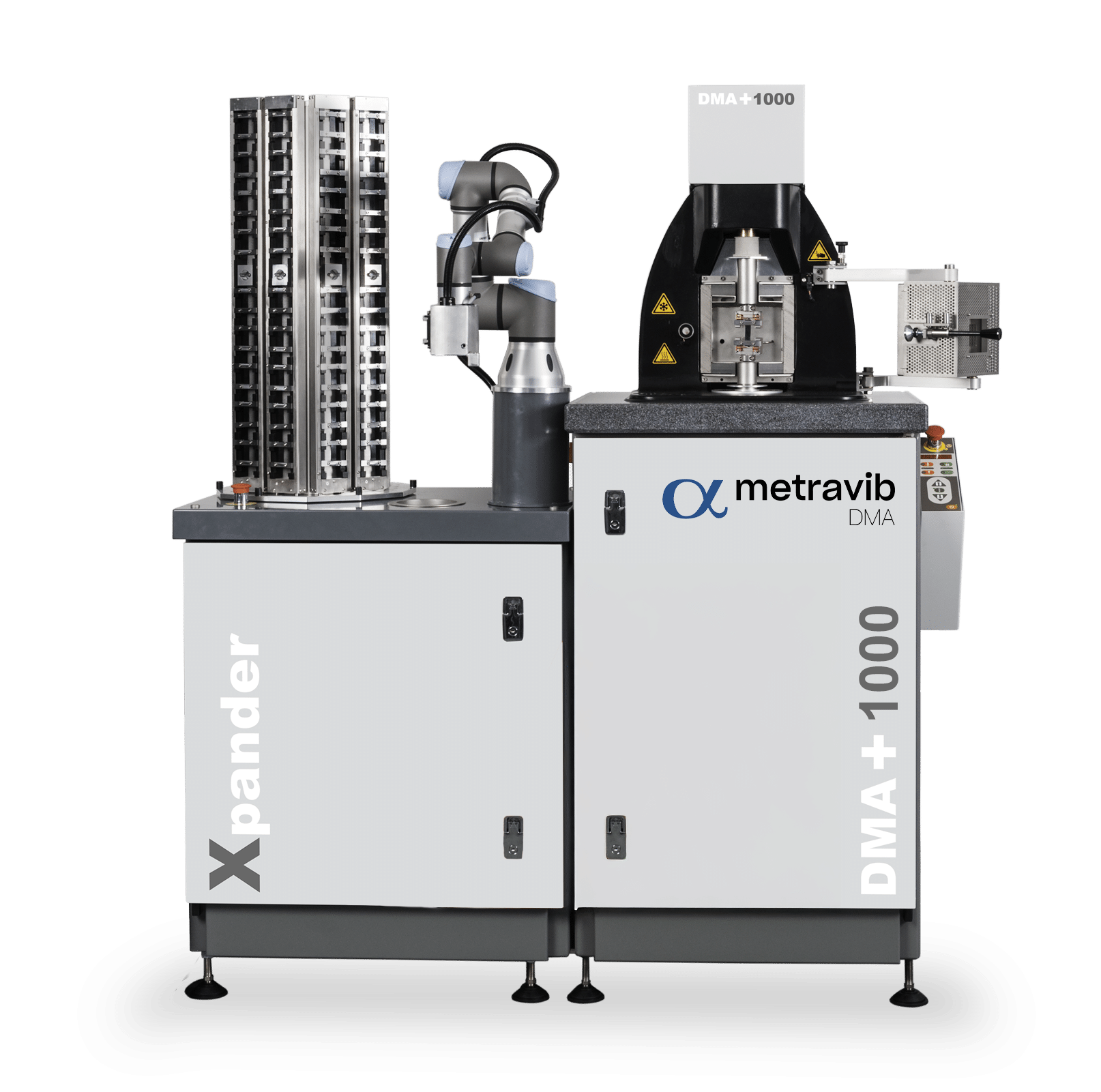
An automated specimen handling system for the DMA+ series that runs test campaigns around the clock without operator intervention, and accommodates specimens of various shapes and sizes. Metravib has supplied automated DMA to rubber and tire leaders for more than 20 years.
All three models share the same frame design, thermal options and Dyna+ software. Choose the force range that fits your materials and specimens.
Dynamic force: up to 300 N
Static force: −70 N to +70 N
Static displacement: 12 mm
Dynamic force: up to 1000 N
Static force: −250 N to +250 N (±500 N option)
Static displacement: 8 mm
Dynamic force: up to 2000 N
Static force: −500 N to +500 N
Static displacement: 10 mm
| Frequency: | Min: 0.00001 Hz Max: 200 Hz Optional Max: 1000 Hz |
| Temperature Range (Hot mode): | Min: Ambient Max (Standard thermal Chamber): 500 °C Max (Thermal Chamber w/ Window): 300 °C Max (Thermal Chamber w/ Infrared Window): 200 °C Max (crack growth thermal chamber): 150 °C Min Variation rate (heating): 0.1 °C/min Max Variation rate (heating): 10 °C/min Thermal Control Stability: +/- 0.1 °C |
| Temperature Range (Cold mode – Cryogenic sources) -Optional | Min: -150 °C Min Variation rate: +/- 0.1 °C/min Max Variation rate: +/- 10 °C/min Thermal Control Stability: +/- 0.2 °C |
| Temperature Range (Cold mode – Air Chiller) -Optional | Min: -70 °C Min Variation rate: +/- 0.1 °C/min Max Variation rate: +/- 10 °C/min Thermal Control Stability: +/- 0.1 °C |
| Dynamic force | Max: DMA+300 (300N*), DMA+1000 (1000N*), DMA+2000 (2000N*) Min: 0.01N* Resolution: DMA+300 (<0.0001 N), DMA+1000 (<0.0003 N), DMA+2000 (<0.0003 N) * peak to peak |
| Static force: | Range: DMA+300 (-70N up to +70N), DMA+1000 (-250N up to +250N), with option (-500N up to +500N) DMA+2000 (-500N up to +500N) |
| Dynamic displacement: | Max: 12mm* Min: DMA+300 (0.05 μm*), DMA+1000 (0.1 μm*), DMA+2000 (0.1 μm*) Resolution: < 1nm |
| Static displacement | range: DMA+300 (12 mm), DMA+1000 (8 mm), DMA+2000 (10 mm) |
| Controlled oxygen atmosphere system – Option | 10ppm to 20% O2 |
| Thermal Chamber Dimensions: | W: 140 mm, D: 95 mm, H: 120 mm |
| Actuator | Electrodynamic actuator (METRAVIB technology) |
Introduction High Frequency Needs Nowadays, a lot of materials are submitted to repetitive mechanical force or solicitation. For example: some joint polymer part …
Introduction Dynamic Mechanical Analysis (DMA) is a well-established technique for characterizing the viscoelastic (mechanical) properties of materials and is increasingly used in biomedical …
Introduction To understand the viscoelastic behavior of a material, Dynamic Mechanical Analysis (DMA) is one of the most useful characterization techniques. It helps …
Introduction During polymer manufacturing, molecules often do not have sufficient time to move into the positions or conformations that correspond to the processing …
Introduction Creep is one of the most fundamental and dominant analytical tools used to study material behavior. These measurements help characterize the response …
Introduction Errors in the conception of composite materials can lead to disappointing mechanical properties. DMA is a powerful tool for determining the properties …
The latest articles, white papers and application notes on dynamic mechanical analysis.
Introduction High Frequency Needs Nowadays, a lot of materials are submitted to repetitive mechanical force or solicitation. For example: some joint polymer part …
Introduction Dynamic Mechanical Analysis (DMA) is a well-established technique for characterizing the viscoelastic (mechanical) properties of materials and is increasingly used in biomedical …
Introduction To understand the viscoelastic behavior of a material, Dynamic Mechanical Analysis (DMA) is one of the most useful characterization techniques. It helps …
Introduction During polymer manufacturing, molecules often do not have sufficient time to move into the positions or conformations that correspond to the processing …
Direct viscoelastic measurement from 100 Hz to 10 kHz, with a sweep in about 5 minutes.
DMA25 and DMA50: flexible, cost-effective desktop thermomechanical testing.
Automated specimen handling to run DMA+ test campaigns around the clock.
Get a quote today and discover how Alpha and Metravib’s dynamic testing instruments, dedicated support and specialized expertise can advance your materials testing.