
EBook: Driving Out Variation
Driving Out Variation in Rubber Materials Catch raw elastomer inconsistency on the loading dock, not after it drops from the mixer. Mooney Viscosity …
The Premier RPA gives QA and R&D labs a complete picture of how a compound will process and perform, with consistent, repeatable data batch after batch.
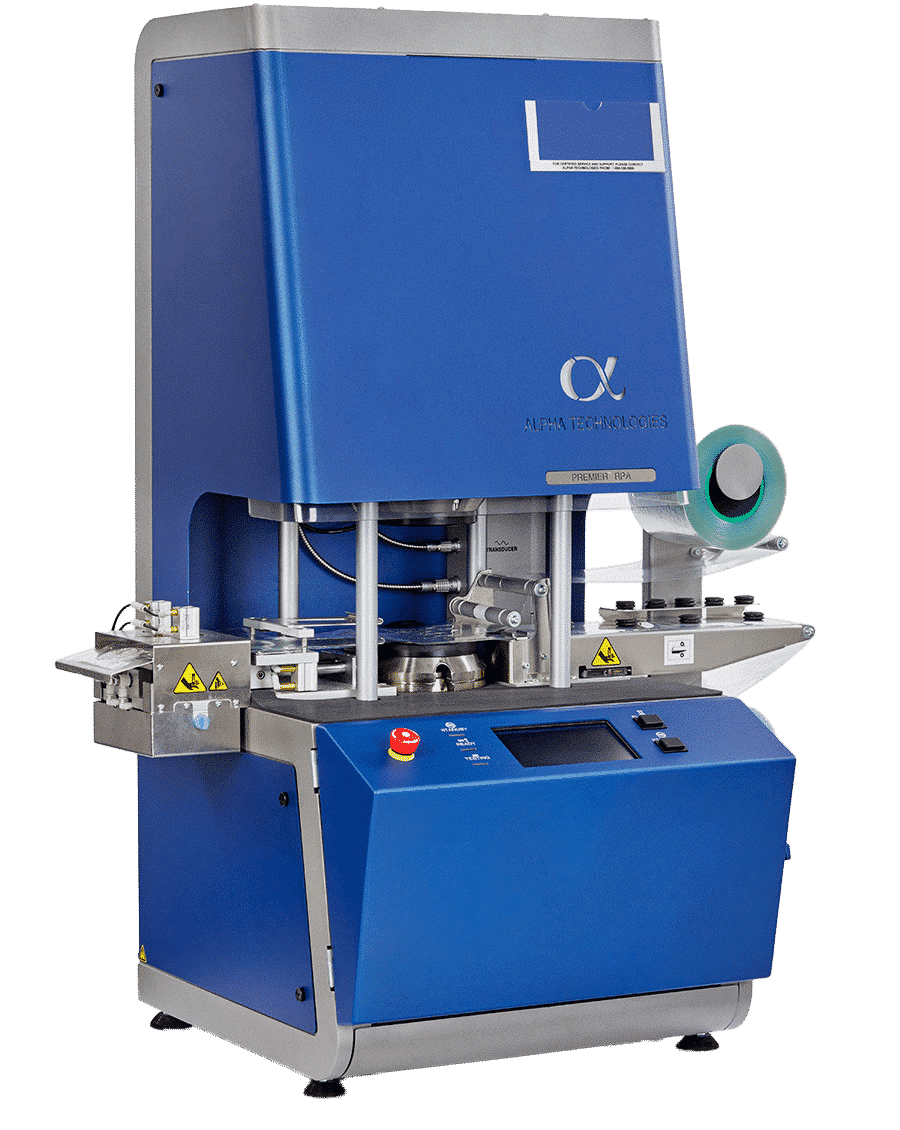
Alpha developed the original Rubber Process Analyzer
Die cool-down between tests — not 20
Maximum test temperature, with ramps up to 1 °C/s
Test standards met out of the box
Premier RPA measures a compound before, during and after cure, so you can see how it will process, how it will cure and how it will perform in a single run.
Pinpoint raw material and process variation with precise testing, reducing defects and keeping results consistent.
Set processing conditions with confidence using actionable data on temperature, shear rate and reaction kinetics.
Minimize field failures with continuous monitoring and predictive insight into how compounds will behave.
Shorten time to market with predictive testing, automated workflows and faster material selection.
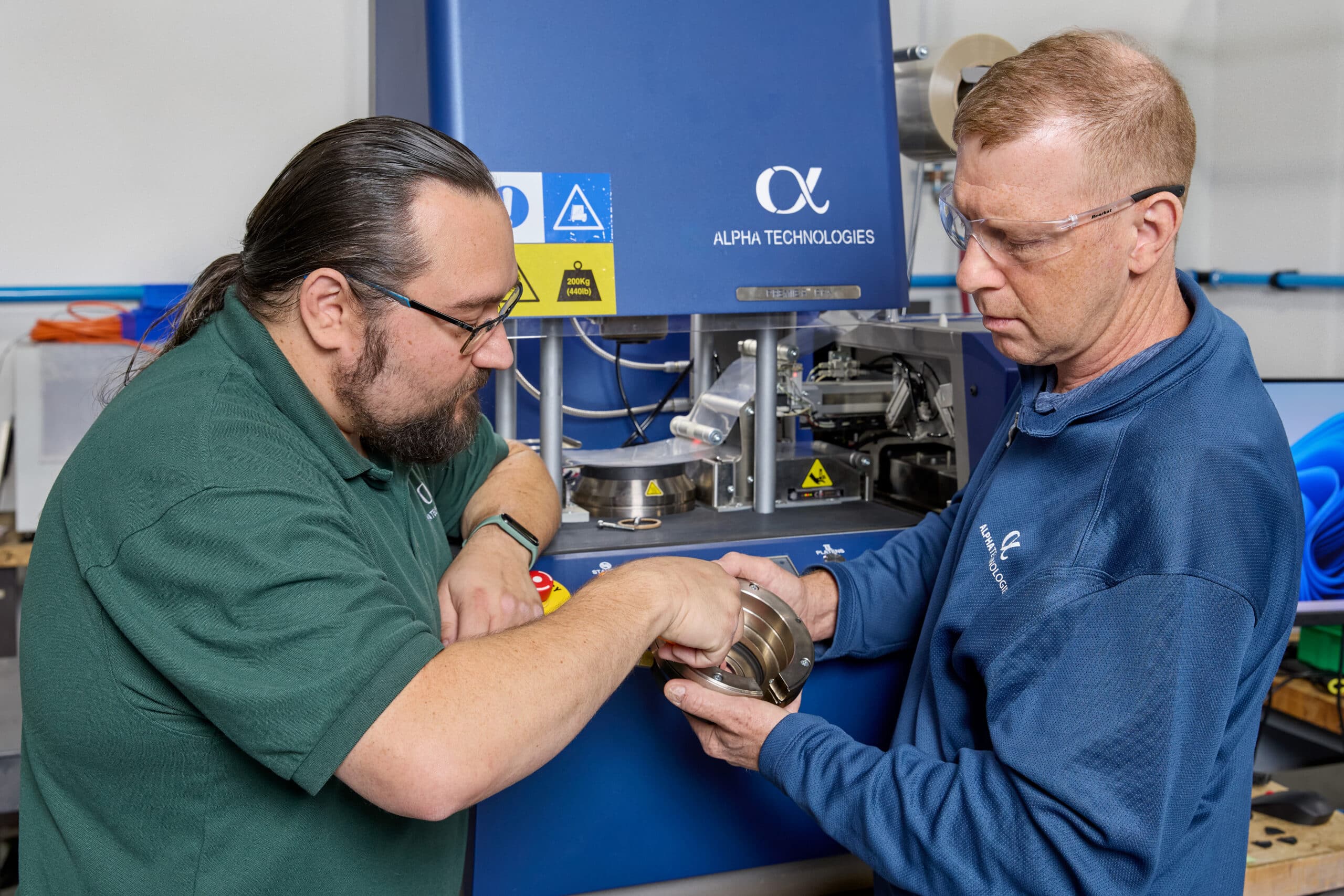
Alpha Technologies developed the first Rubber Process Analyzer, and more than three decades later our scientists and engineers are still refining it. But reputation only goes so far. QA and R&D labs choose Premier RPA because it is dependable, day in and day out.
Premier RPA is engineered for continuous duty in both the lab and on the factory floor. Its repeatability carries across every instrument in your network, so results from one plant line up with results from any other. Your data doesn’t shift just because your time zone does.
Take a closer look at the RPA design, controls and workflow in our interactive virtual demo — no appointment needed.
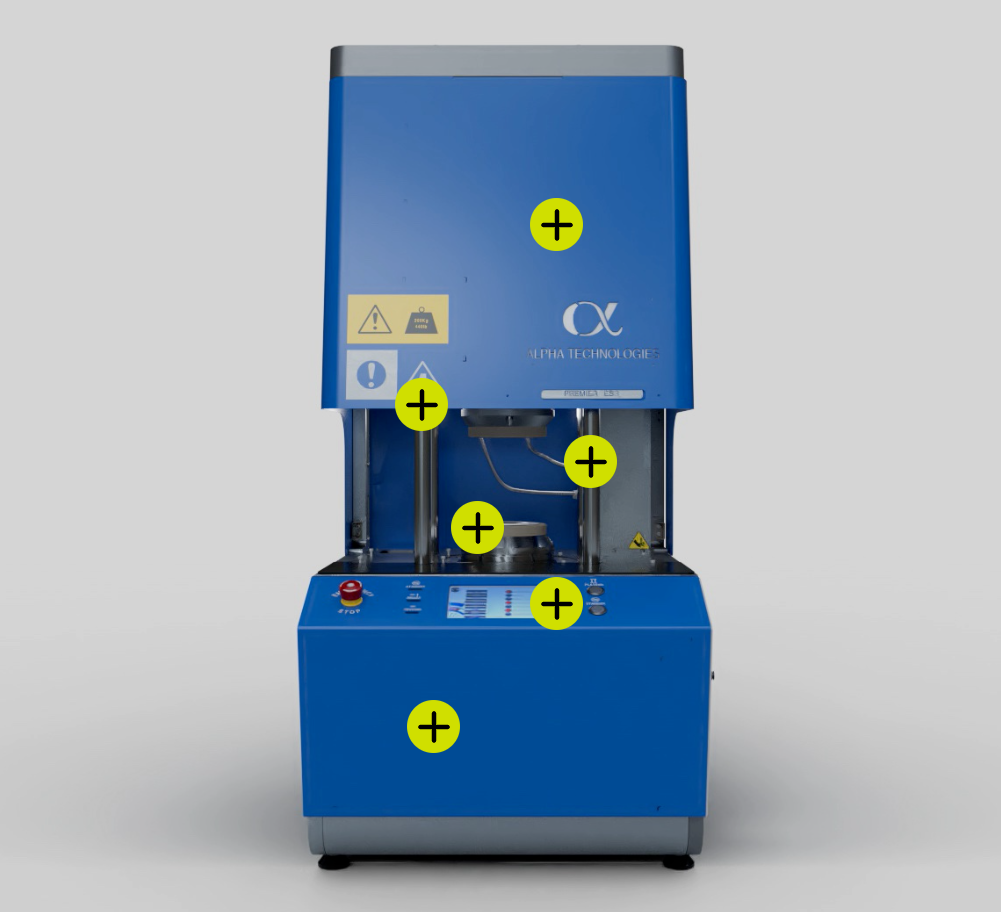
Not every RPA is built the same way. Here’s what comes standard with Premier.
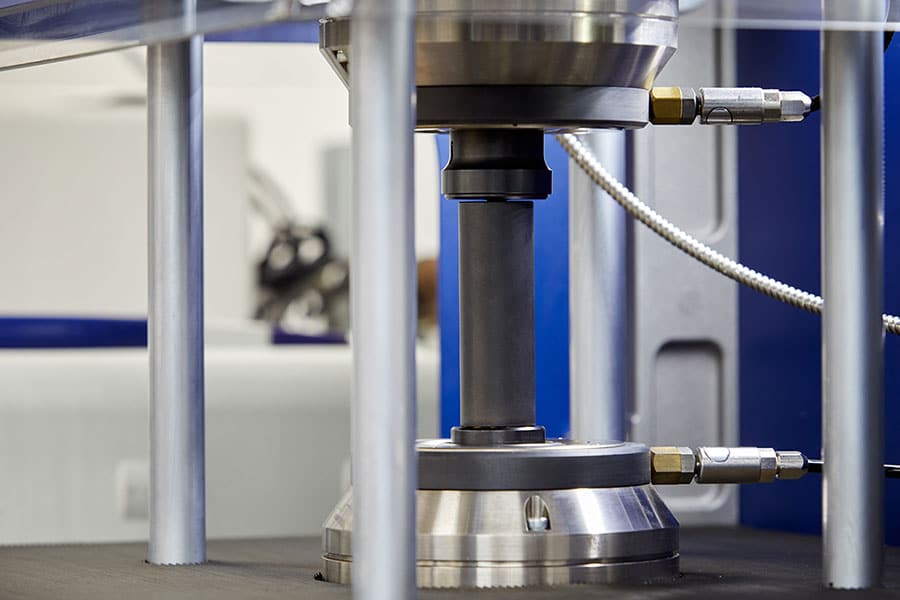
Stiffer seals with low friction prevent slippage and leakage, so there’s no loss of signal. They also last longer between changes.
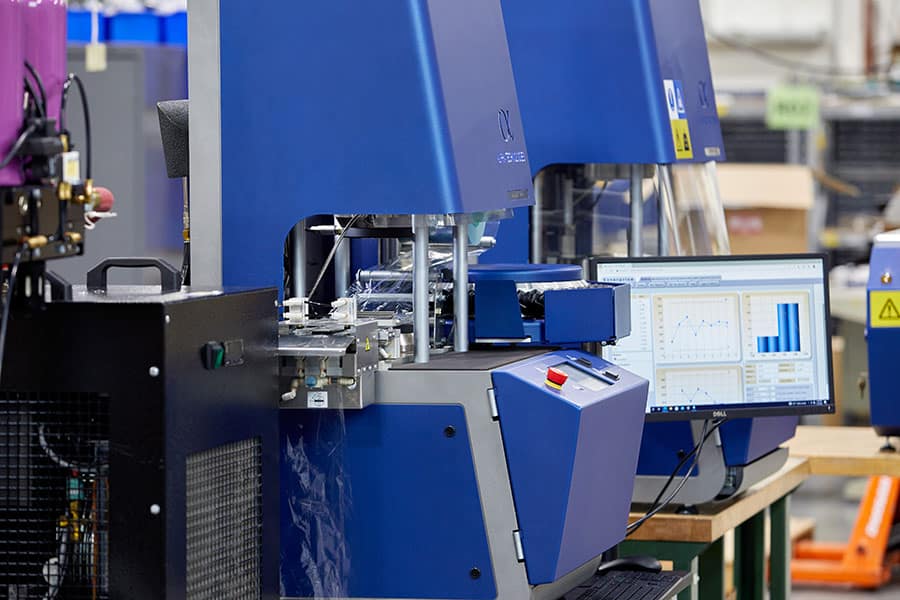
Workbench runs the instrument while Online Manager analyzes data. Review results while a test is still running — no waiting for it to finish.
Oversampling captures more data points per second with better signal-to-noise than anyone else. At low strains, where the signal is smallest, EDR gives you the resolution others lose to noise.
Changed your seals? Recalibrate the instrument yourself and get back to precise results without resorting to fudge factors.
Premier RPA torque standards keep your instrument accurately calibrated. Cheaper standards carry an unacceptable margin of error and need fudge factors to come out “right.”
Every Premier RPA includes the engineering that makes the whole Premier line faster, more stable and easier to use.
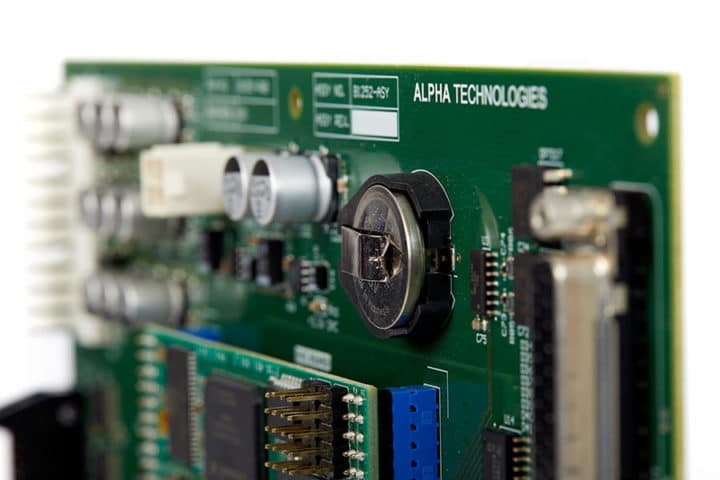
Custom Electronics that are matched to the instrument. Better control. Better resolution. Other RPAs use off-the-shelf PLCs to save money, but can’t fine-tune their electronics to their instrument – often overshoot set points then spend valuable time stabilizing.
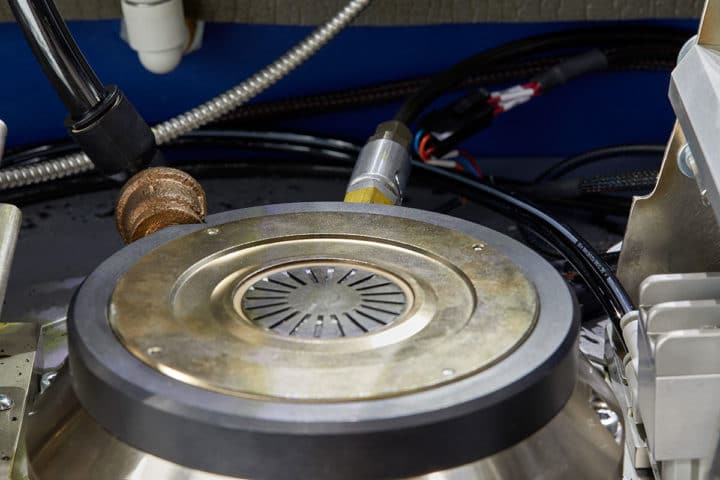
Efficient die cooling that gets your instrument ready for the next test. Why wait 20 minutes for dies to cool down when Premier instruments take about 6 minutes. (And our instruments are smart enough to know when the instrument reaches the right temperature. Others, not so much.)
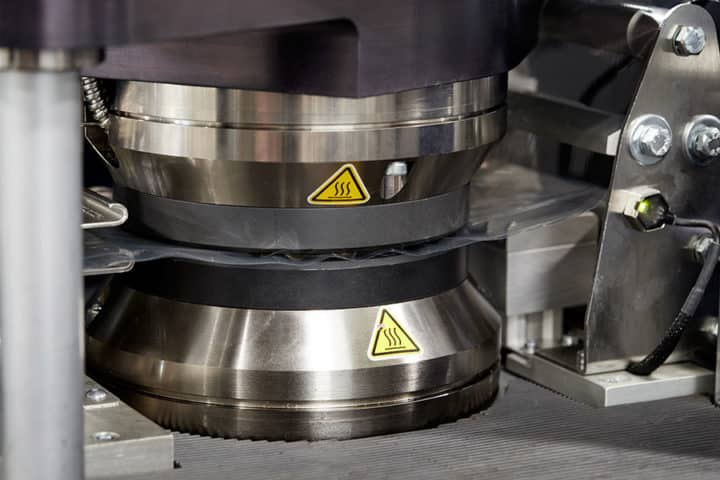
Because they are designed specifically for Premier instruments, our heating control system ramps up heating cycles faster and maintains control for more accurate cure times and more efficient production.
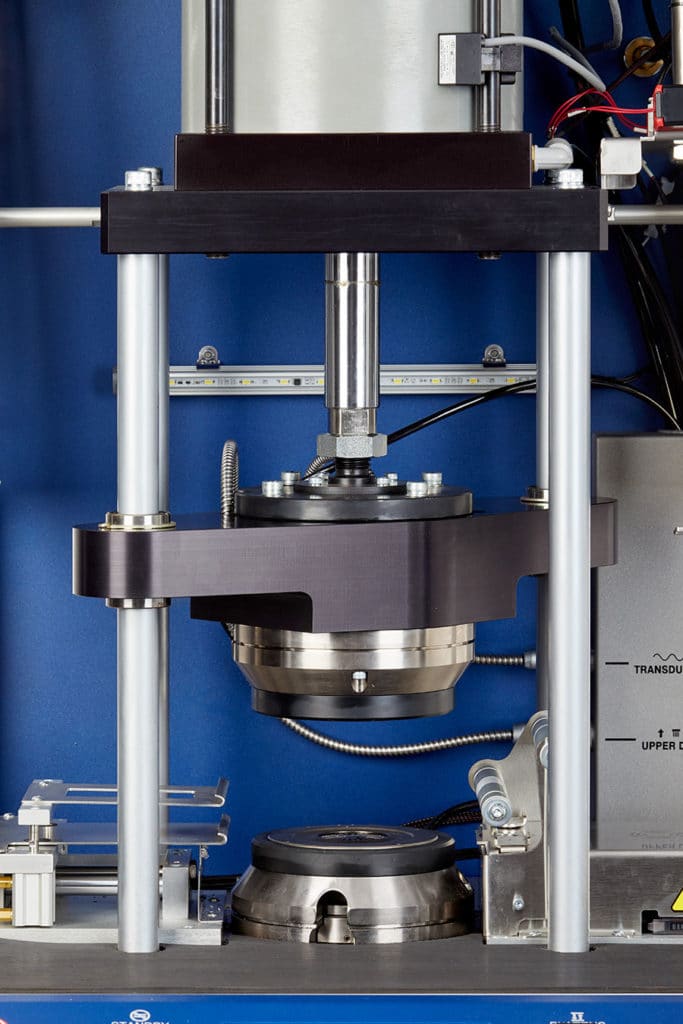
More accurate measurements. No loss of signal thanks to Premier’s Smart Alignment and Dynamic Symmetry. On-target, parallel die closing, high stiffness and constant closing force.
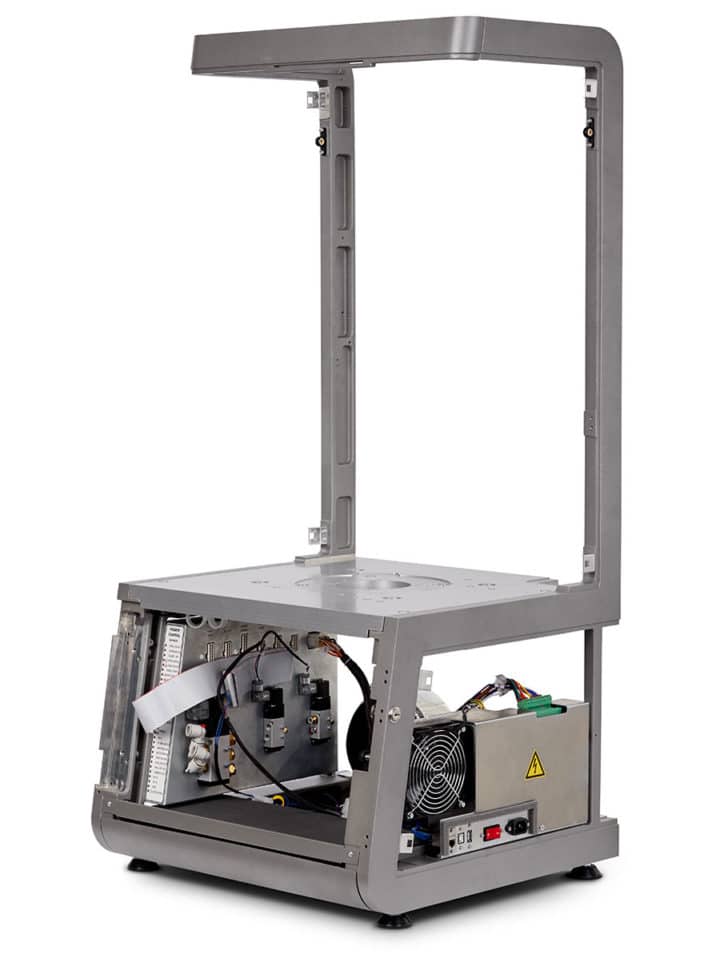
Work smarter not harder with lighter, cast aluminum frames. Not only are Premier frames light, but incredibly stiff for less variability. What’s more, Premier instruments incorporate frame compliance into the calibration for better data.
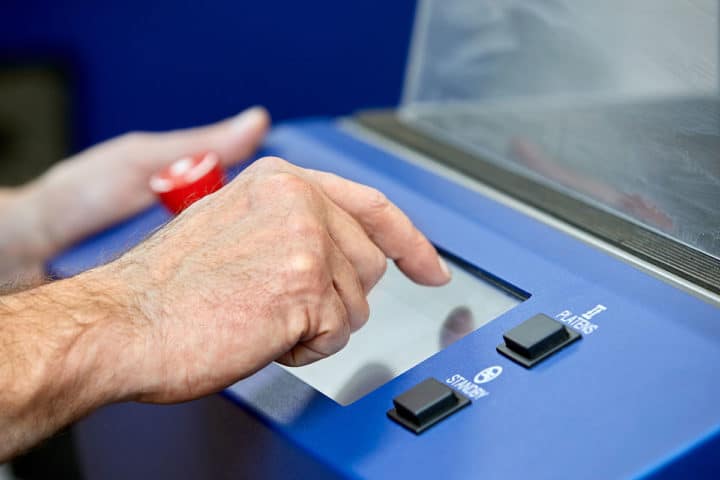
Our incredibly intuitive user interface comes to you through a large, bright, touch screen panel that lets you navigate to the view you want or the information you need, fast and easy.
Premier RPA applies controlled oscillating strain across a wide range of frequency, strain and temperature. That lets one instrument cover raw polymer, uncured compound, cure and after-cure testing.
| Frequency: | 0.1 to 3000 cpm (0.0016 to 50 Hz) |
| Temperature Range: | Ambient to 446 °F (230 °C) |
| Max Ramp Rate: | 1.8 °F/s (1 °C/s) |
| Max Cool Rate: | 0.9 °F/s (0.5 °C/s) |
| Strain: | ±0.07% to ±1255% (±0.005 to ±90 degrees) |
| Measured Data: | Torque, temperature, frequency, strain, pressure, and angle |
| Calculated Data: | G’, G”, G*, J’, J”, J*, S’, S”, S*, tanδ, η’, η”, and η* |
| Testing Standards: | Meets ASTM D5289, D6048, D6204, D6601, D7050, D7605, and D8059 |
| Reports and Export Files: | Numerous formats including text and Microsoft Excel © files |
| Electrical: | 100/110/120/130 VAC ±10%, 60 ±3 Hz, 20 amp single phase 200/220/240/160 VAC ±10%, 50 ±3 Hz, 10 amp single phase |
| Air Pressure: | 80 psi (5.6 kg/cm 550 kPa) minimum |
| Dimensions: | W: 22 in (56 cm), D: 25 in (64 cm), H: 45 in (122 cm) |
| Weight: | Net 346 lb (157 kg), gross 547 lb (248 kg) |
Driving Out Variation in Rubber Materials Catch raw elastomer inconsistency on the loading dock, not after it drops from the mixer. Mooney Viscosity …
Organizations around the world use the Premier RPA for research into product innovations that improve quality and promote sustainability. Here are examples of …
Fillers can serve a wide range of functions within a polymer compound. A filler may improve performance characteristics, such as strength or durability, …
Heat generation is inevitable for any rubber product or material that experiences cyclic loading while in service. This includes tires, industrial belts, and …
A brief guide to bound rubber Bound rubber is the result of interactions between polymer chains and fillers, such as carbon black or …
Alpha Technologies strengthens University of Akron partnership with Premier RPA donation and $50,000 pledge to advance recycled rubber research.
What is a Rubber Process Analyzer? A rubber process analyzer (RPA) is a rubber testing instrument used to evaluate and quantify the dynamic …
Learn FT-Rheology LAOS test method for non-linear viscoelastic material analysis with RPA.
Predicting Low Temperature Compression Set with a Rubber Process Analyzer (RPA) Learn From The Rheology Experts A compression set of rubber material is …
Webinar: Reduce Raw Material Variation Using Rheometry Learn From The Rheology Experts Check out this webinar that we conducted with Rubber News on …
Predicting Tire Performance Through Rheometry Learn From The Rheology Experts Rolling resistance, wet/dry traction, ice traction, and handling/cornering are key tire performance indicators …
Your Safety Depends on the Purity of Your Medicine Case One In this critical application, a pharmaceutical sterile injectable supplier reached out with …
The latest articles, white papers and application notes on Premier RPA testing.
Driving Out Variation in Rubber Materials Catch raw elastomer inconsistency on the loading dock, not after it drops from the mixer. Mooney Viscosity …
Organizations around the world use the Premier RPA for research into product innovations that improve quality and promote sustainability. Here are examples of …
Fillers can serve a wide range of functions within a polymer compound. A filler may improve performance characteristics, such as strength or durability, …
Heat generation is inevitable for any rubber product or material that experiences cyclic loading while in service. This includes tires, industrial belts, and …
Collect, analyze and share test data across instruments, labs and plants in one secure system.
Add automated sample loading to run more tests with less technician time.
Keep your RPA accurate and audit-ready with factory-trained calibration and service.
Get a quote today and discover how Alpha’s rheology instruments, dedicated support and 60+ years of specialized expertise can advance your materials testing.