
Understand how DMA helps rubber engineers measure viscoelastic behavior, identify thermal transitions, evaluate damping and build test methods that reflect real service conditions.
Complete the form and we’ll email you a link to the download.
frequency, strain and temperature
key analyses explained
tips for getting better results
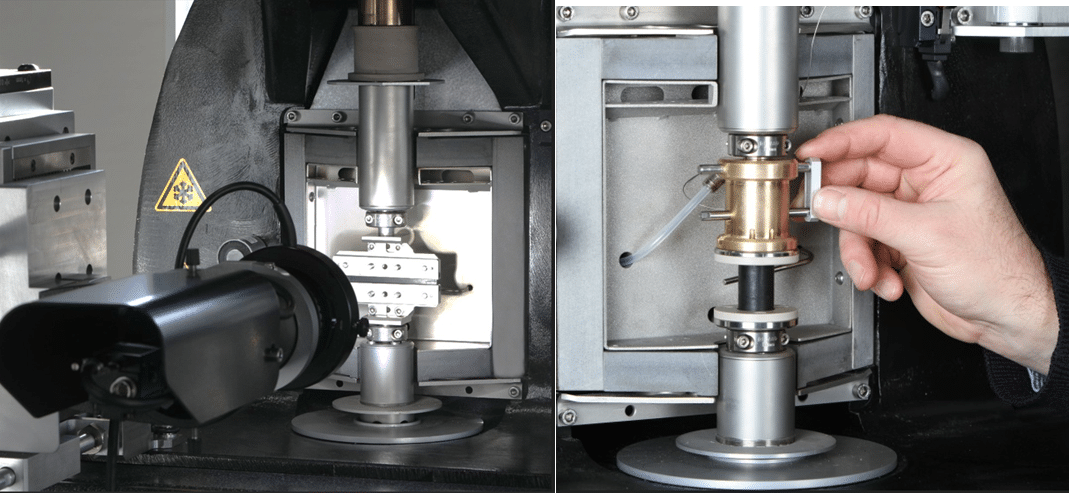
Rubber compounds don’t perform in a static world. They flex, damp, heat up, recover, and change behavior with temperature, frequency and strain. DMA gives engineers a sharper view of those changes, so teams can evaluate long-term performance with greater confidence.
Whether you work on tire compounds, seals, anti-vibration parts or other elastomer applications, DMA connects what happens in the lab to what happens in service.
Focused on the measurements, test types and interpretation methods that matter most for rubber and other viscoelastic materials.
Learn what stiffness, storage modulus, loss modulus, phase angle and tan δ reveal about how a material stores and dissipates energy.
See how frequency sweeps, strain sweeps and temperature ramps characterize unknown materials, define linear and non-linear behavior, and study Payne and Mullins effects.
Understand how DMA supports glass transition analysis, damping evaluation, master curve construction and prediction across wider operating conditions.
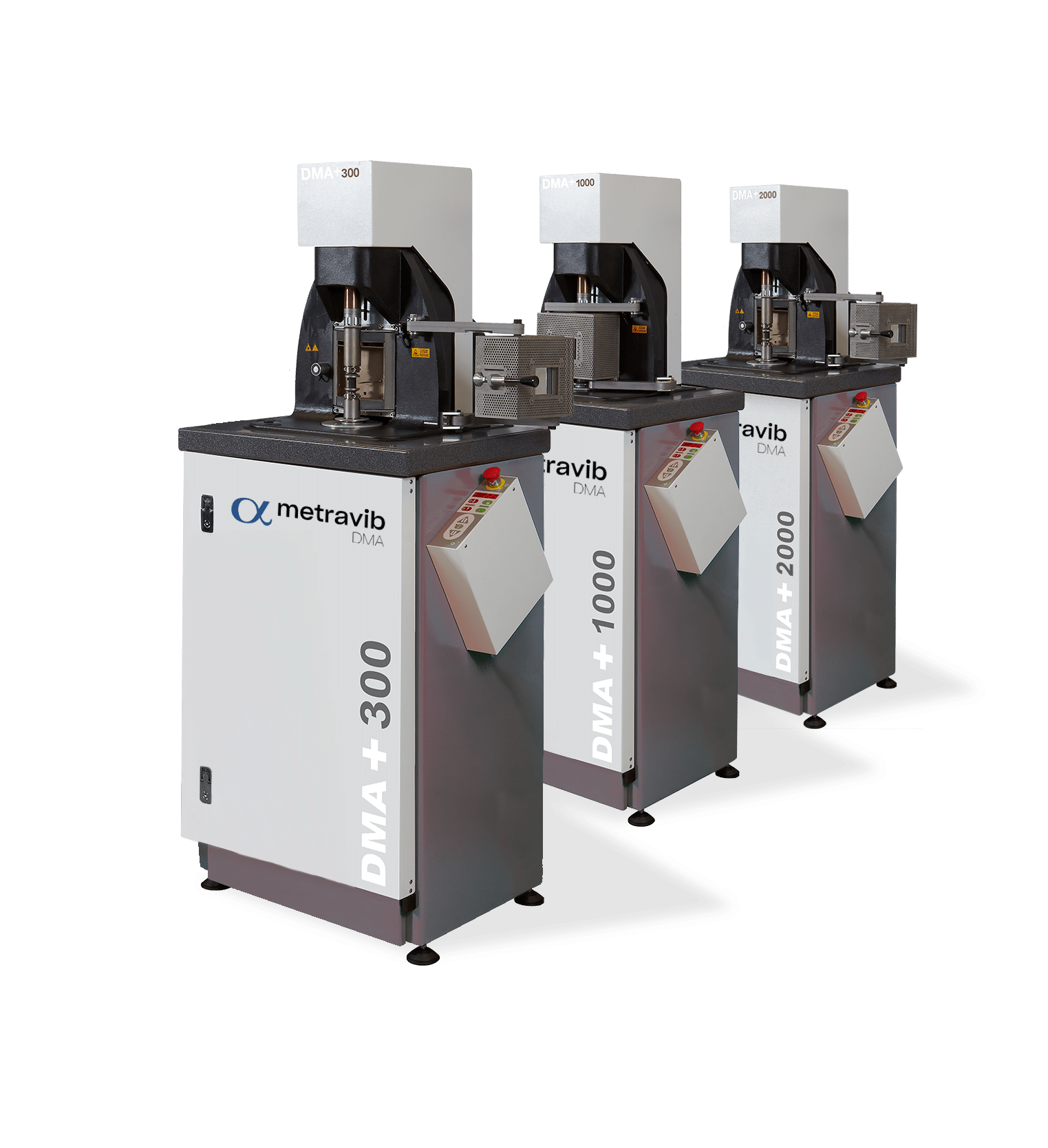
The DMA+ series analyzes elastomers, polymers, composites, films, gels, adhesives and packaging materials. A one-piece high-rigidity frame, broad measurable stiffness range, multi-frequency testing and fixtures for tension, compression, shear and bending support deeper, more reliable characterization.
This guide explains the fundamentals of DMA, walks through the most common test protocols, and includes tips for Metravib instruments and for integrating DMA into research, development and testing workflows.