
Gel content has a major impact on how elastomers process and how the final product performs. Learn how to detect and quantify it before it disrupts your production line.
Complete the form for instant access to the full white paper and all three case studies.
of rubber and polymer testing expertise
tire manufacturers choose Alpha instruments
covering BR, e-SBR and NBR
Inconsistent production results? Variable gel content could be the cause. Alpha Technologies’ Jayson Humble and Rick Hanzlik explain the challenges gel creates and how to keep it from disrupting your line.
Gel in an elastomer sample is either:
Gel may also be characterized by extremely high molecular weight. It is not caused by branching or a curing agent.
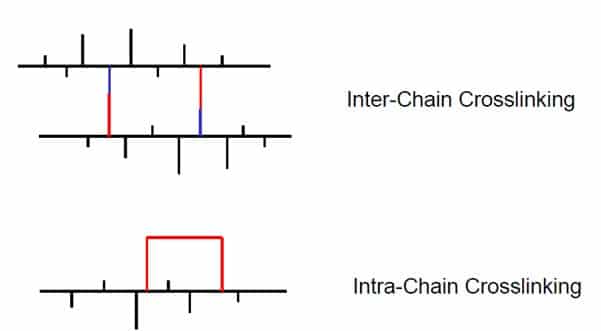
Gel content has a significant impact on an elastomer’s viscoelastic properties and on the mechanical properties of the final product. In a filled rubber compound, it also strongly influences processing behavior:
Knowing the gel content before mixing begins is critical, especially in a closed-chamber mixer where you can’t observe the compound directly.
Excess gel is usually unwelcome, but not always. When a large amount of reinforcing filler such as carbon black isn’t properly dispersed, the compound can become crumbly instead of forming a shape. Gel can overcome this, and it can help a mixed compound achieve green strength.
Common methods can indicate that gel is present, but they can’t tell you how much. Quantifying gel takes a more advanced approach.
The common solvent method can’t determine an absolute gel value, because results depend on the solvent, the time allowed for solubilizing and the test temperature.
Time sweeps, frequency sweeps and stress relaxation tests detect gel qualitatively, but can’t quantify it or capture complex branching patterns.
Large amplitude oscillatory shear with Fourier transform analysis accounts for all odd higher harmonics in the torque signal, describing the real nonlinear response and quantifying the distortion.
Aging and unsuitable stabilizers can create significant gel, for example when raw materials sit in a warehouse for long periods. The Premier RPA simulates aging inside the test die with high temperature and high shear, so the whole procedure runs on one instrument:
LAOS testing at 150 °C determines the sample’s LCB indexes before aging.
The sample is exposed to elevated temperature and high shear in the RPA die.
A second LAOS test at 150 °C; comparing Lissajous figures and LCB indexes detects and quantifies gel.
Alpha Technologies validated this approach with three raw elastomers. All three case studies, with their charts, graphs and images, are included in the white paper.
Tests how well a stabilizer protects an experimental grade of BR from oxidation by controlling molecular weight changes and gel formation.
Investigates how gel affects compound processability, specifically extrusion behavior and filler dispersion.
Traces the root cause of inconsistent extrusion behavior in two NBR samples from different lots made by the same manufacturer.
Get the full white paper, including all three case studies, and see how the Premier RPA helps you detect and quantify gel before mixing begins.