
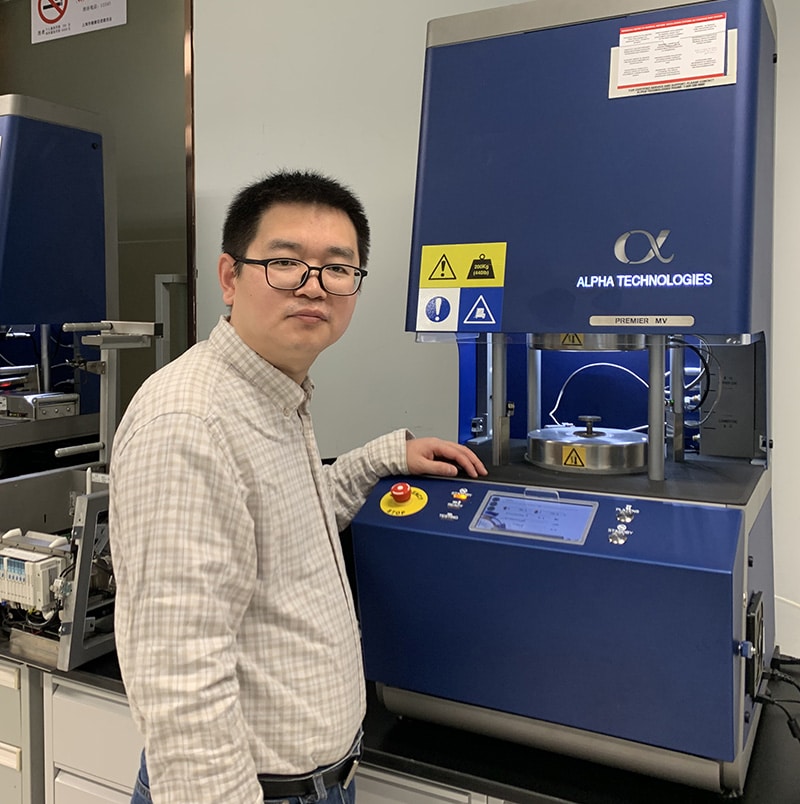
Die swell is a viscoelastic effect related to a compound’s uncured elasticity, or “nerviness.” Part 2 shows how to tune Premier RPA frequency sweeps so tan δ predicts, and helps you control, die swell.
- RPA uncured tan δ correlates inversely with capillary rheometer die swell
- Tan δ is the key parameter for controlling die swell
- At 1% strain the filler network stays intact, so 75 phr N234 shows misleadingly low tan δ
- At 50% strain the filler network breaks up and tan δ shows the correct relationship
Well, That's Just Swell
As we covered in Part 1 of this blog, die swell (also called the Barus Effect) occurs during extruding or calendaring in the factory. It’s when the extruded rubber compound leaves the extruder die with a greater dimensional diameter than the diameter of the extruder die orifice itself. Die swell is a viscoelastic effect related to the compound’s uncured elasticity or “nerviness”. This effect is demonstrated in Figure 1 below.

Figure 1. Extruding rubber through a die orifice
For many years, efforts have been made to predict compound die swell in extrusion. And it is well known that the capillary rheometer is an effective instrument for measuring die swell. In fact, the capillary rheometer is the most common way to measure the die swell and other rheological behavior. However the complicated testing process required by an instrument such as the ARC 2020 limits its wide use. Fortunately, the Premier™ RPA is unique in its ability to perform tests under a range of large strain/ frequency combinations. More importantly, it has the great advantage of being easy to operate while delivering excellent repeatability. In short, the Premier RPA is a more convenient way to control die swell.
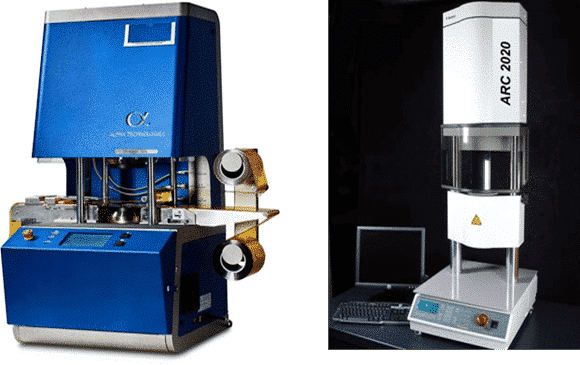
Figure 2. The Premier RPA and ARC2020 Capillary Rheometer
Ways to Control Die Swell Using a Premier RPA
For this article, comparisons were made between Premier RPA and ARC 2020. As can be seen in Figure 3 below, RPA uncured tan δ inversely correlates to the capillary rheometer die swell. In other words, Tan δ increases when die swell is reduced (lower intrinsic elasticity), so Tan δ is the key parameter for controlling the die swell. However, the key question is how to get appropriate Tan δ values?
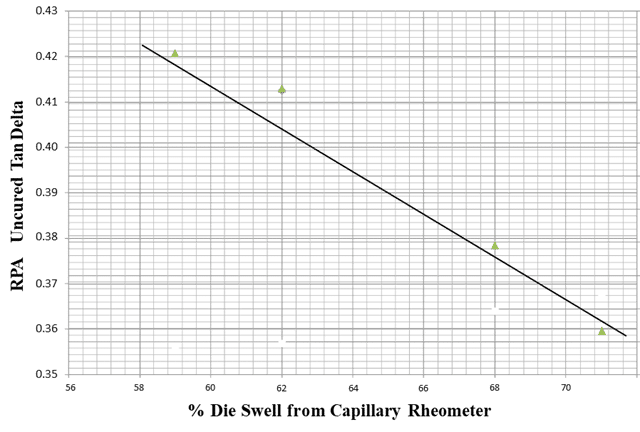
Figure 3. Die Swell from capillary rheometer vs RPA Tan Delta
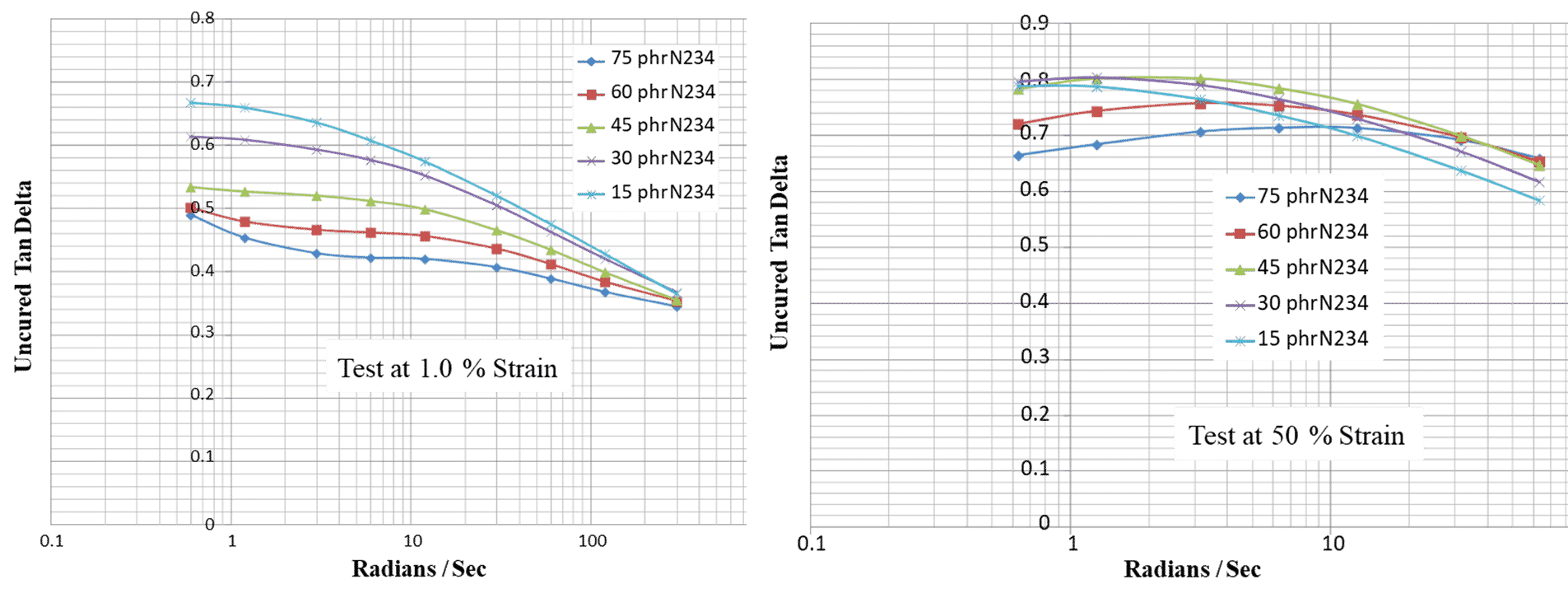
Figure 4. Results of increasing concentration of filler on uncured Tan Delta at 1.0% and 50%
Faster. Easier. More Repeatable. What's Not to Like?
While a capillary rheometer, such as the ARC 2020 is the most common and accurate way to predict die swell, it can be difficult to use. This complexity can result in unintentional variability of data, if not managed by a skilled operator.
On the other hand, the Premier RPA provides these advantages:
- Faster and more productive prediction of extrusion die swell.
- Simplicity of operation.
- Repeatability is better with the RPA to measure rheological properties relating to die swell than with the Capillary Rheometer.
- Applicable to routine QC to provide early characterization of batches prior to processing, reducing the costs of scrap, downtime or rework.
The right instrument for a swell job.
The Premier RPA is specifically designed to measure viscoelastic properties of elastomers and rubber compounds. These properties are the key parameters for the understanding of polymeric flow. Premier RPA can effectively predict the die swell of rubber compounds in extrusion processing, with excellent correlation between die swell and uncured compound viscoelastic data (Tan δ) measured under frequency sweep. In setting up your test, the specific strain amplitude applied during the performance of the RPA frequency sweep is very important. Increasing the applied strain in a sequence of multiple frequency sweeps can measure an uncured tan δ inversion. Actual process conditions, screw speed and temperature, head temperature etc., can also be considered as important setting reference parameters.
Control die swell with the Premier RPA
Talk to our applications team about frequency sweep set-up for your extrusion compounds.