
The LAOS technique is very sensitive to detect long chain branching (LCB) in polymers and can be used for quality control in thermoplastic and synthetic rubber production, to check polymer architecture and predict processability.
- Four case studies: Li-BR, EPDM, e-NBR and PE, all run on Premier RPAs
- LAOS detected subtle LCB differences in PBD samples with nearly identical Mw and MWD
- LCB indexes can track branching lot-to-lot in synthetic rubber production QC
- LAOS also distinguished ACN content and gel in e-NBR, and linear vs branched PE
The LAOS technique is very sensitive to detect the LCB in polymers and can be used for quality control in the thermoplastic and synthetic rubber production to check the polymer architecture and to predict the processability in their applications.
Putting Theory Into Action: Case Studies
To validate the approach presented in this blog and in several papers published by Alpha, we show several case studies in which we investigated several raw polymers, elastomer and thermoplastic materials such as Li-BR, EPDM, NBR, PE. Experiments were run on Alpha Technologies’ Premier™ RPAs using the LAOS test method.
Case Study One
Three PBD (“low cis polybutadiene”, Li-BR) samples having nearly the same molecular weight and molecular weight distribution but with a subtle difference in the long chain branching content were investigated to assess the sensitivity of the above-mentioned test method. These materials were synthetized by anionic polymerization leading to polybutadienes with a medium cis-1,4 content. Some characteristics of the molecular structure are summarized in the following table:
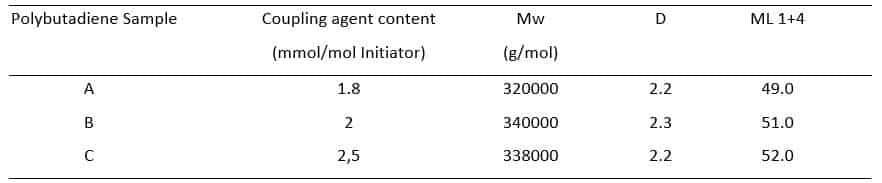
Table 1. Molecular structure of the three PBD (Li-BR) samples
We performed a LAOS experiment on all investigated PBD samples at the following testing conditions: ±1000% strain at 150 °C and 0.1 Hz.
By comparing the Lissajous figures of the investigated samples, it is possible to observe the increasing in the LCB content from sample A to sample C: the higher is the level of LCB the more the loading part deviates from the unloading part, thus, increasing the loop surface and balancing the distortion
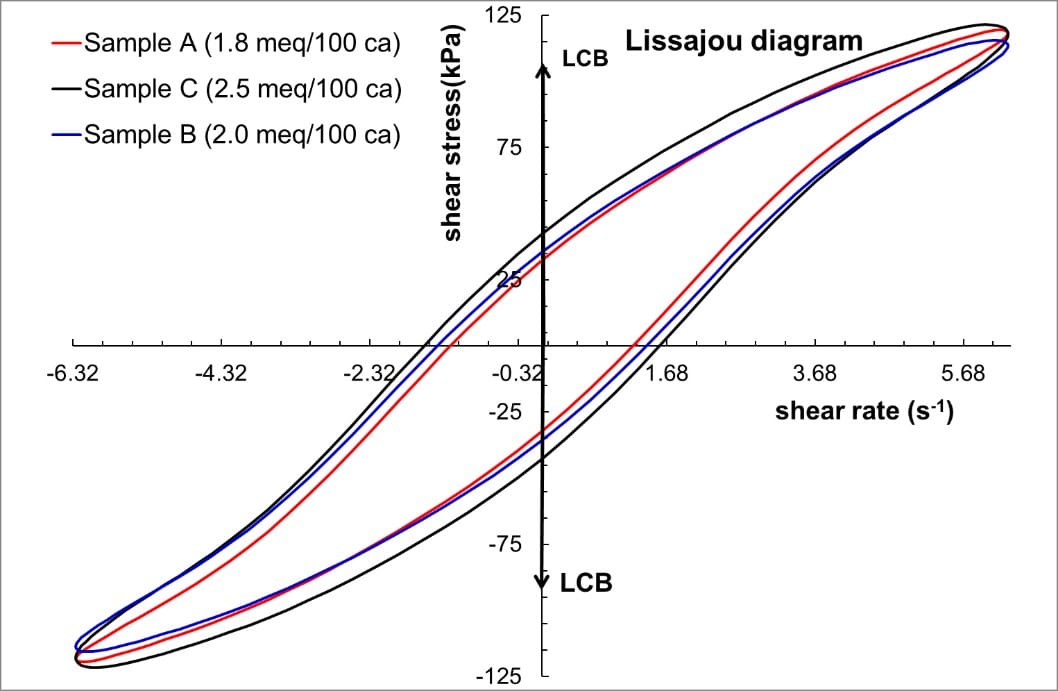
Figure 1. Lissajous figures of PBD samples A to C
Using the above mentioned LCB indexes it is possible to quantify the different level of long chain branching in the examined samples confirming the high sensitivity of this test method:
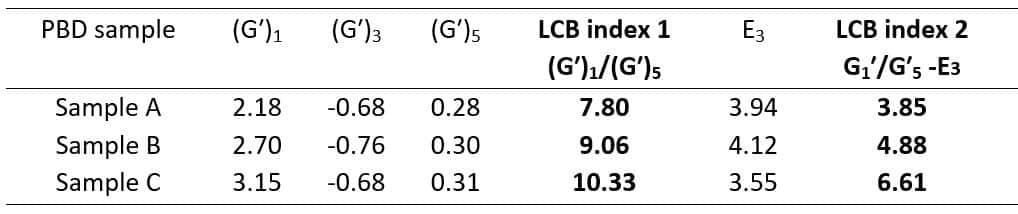
Table 2. LCB indexes of the PBD samples
The big advantage of this technique compared with the traditional rheological techniques (Van Gurp-Palmen plot, damping function by stress relaxation in shear and extensional rheology) is that it allows detection of subtle variation in the degree of branching due to the different coupling agent content that can significantly affect the processability of the end-product. In this case the examined PBD samples are used in the ABS production and a subtle variation in the branching content can cause a worsening in the processability of this material.
Case Study Two
In this study we characterized different EPDM grades having different molecular architectures and especially a different branching content. Also, in this case by comparing the Lissajous plots, it was possible to detect the different molecular architecture of the examined EPDM grades: Nordel shows a linear macrostructure while Vistalon is characterized by a branched macrostructure
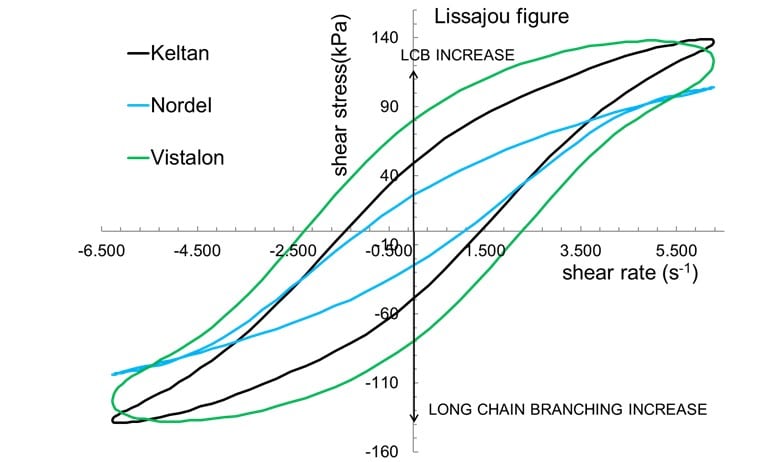
Figure 2. Lissajous plots of Nordel (linear) and Vistalon (branched) EPDM
Both LCB indexes confirm this trend: the linear EPDM grade, Nordel, has a negative value of the second LCB index 2 while the branched EPDM grade, Vistalon, shows high LCB indexes values.

Table 3. LCB indexes of the EPDM grades
This approach is used for QC in the synthetic rubber production to check the polymer architecture: in this case the LCB index of an EPDM grade is monitored/tracked during the production run to check the branching (LCB content) in different lots, see Figure 3. The same approach can also be used by compounders to check the quality of the raw material/elastomers.
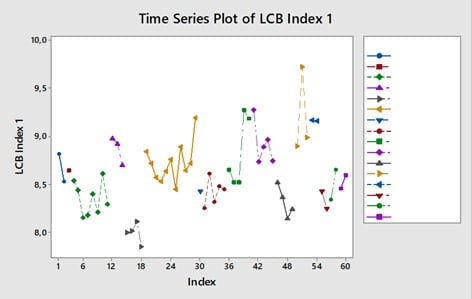
Figure 3. LCB index tracked across EPDM production lots
Case Study Three
In this case study we investigated three e-NBR samples with a different acrylonitrile (ACN) content, varying from 28% to 39%. Despite the different acrylonitrile content, all the considered grades have similar Mooney Torque at standard conditions, i.e., ML(1+4) at 2 rpm and T = 100 °C.
By comparing the Lissajous figures of the investigated materials, it was possible to detect the different ACN content in the examined NBR samples.
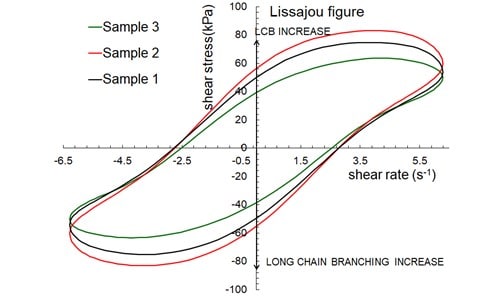
Figure 4. Lissajous figures of e-NBR samples with 28% to 39% ACN
Also, in this case the LAOS technique allows detection of the different branching content in the investigated e-NBR samples as confirmed by both LCB indexes. Additionally, the LAOS method can be used to check the presence of gel content. A significant gel content can affect the processability of this material in the mixing and in the extrusion process.
Case Study Four
Finally, the LAOS technique is used to check the presence of the LCB in PEs grades and to quantify this content. In this study we compared a linear PE grade with a long chain branched PE grade.
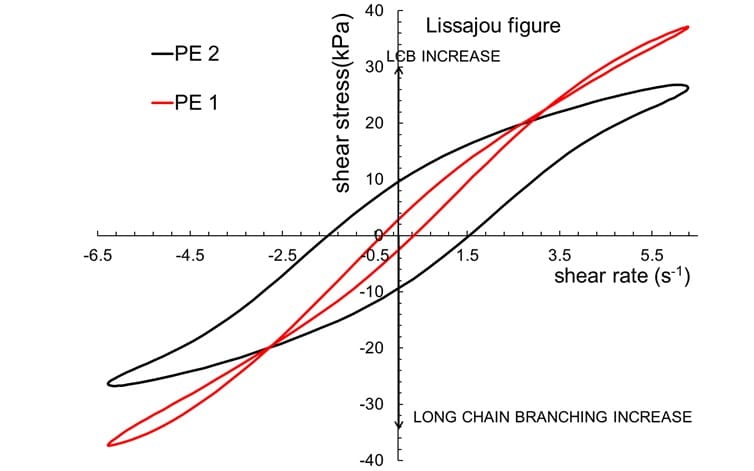
Figure 5. Lissajous plots of linear (sample 1) and branched (sample 2) PE
Also, in this case by comparing the Lissajous plots, it was possible to detect the different molecular architecture of the examined PE grades: sample 1 shows a linear macrostructure while sample 2 is characterized by a branched macrostructure.
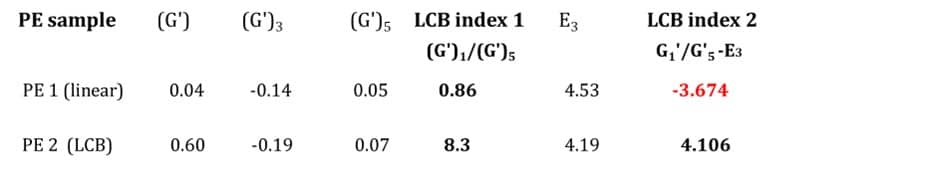
Table 4. LCB index comparison of the PE samples
Using both LCB indexes it was possible to confirm the completely linear macrostructure of the sample 1 (negative value of the second LCB index 2) and the long chain branched structure of sample 2.
Also, in this case the LCB has a profound effect on the processability of this class of material, because the long branches for PEs has been used to delay the onset of melt fracture toward higher shear rates, and the LAOS technique is very sensitive to detect this kind of branching content
Put LAOS to work in your lab
Talk to our applications team about LCB and processability testing on the Premier RPA.