
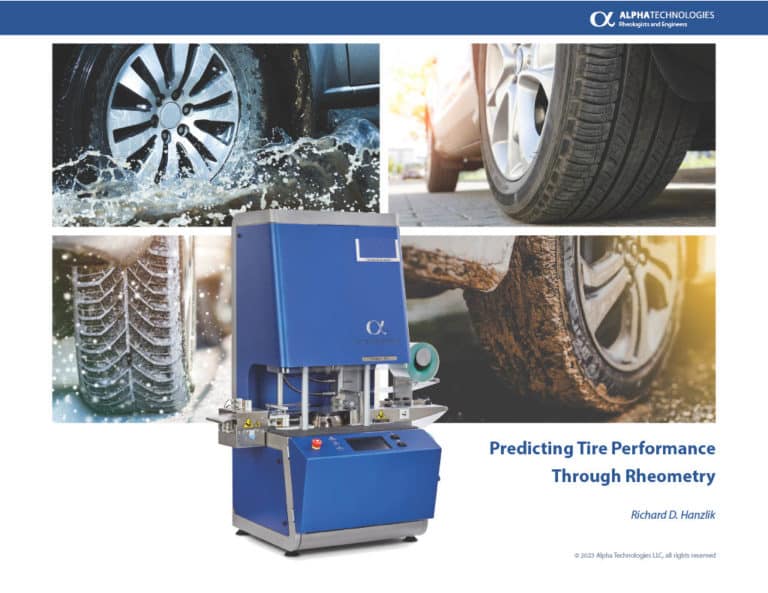
Predicting Tire Performance Through Rheometry
Rolling resistance, wet/dry traction, ice traction, and handling/cornering are key tire performance indicators that can be difficult to determine experimentally. With the right testing instrument, you can predict them from a simple rubber process analyzer.
- Key tire performance indicators: rolling resistance, wet/dry traction, ice traction, handling/cornering
- Why standard DMA, with time-consuming sample prep and specialized operators, is limited to R&D
- How loss modulus, tan δ and loss compliance at various temperatures predict tire performance
- Collecting that data on a simple rubber process analyzer
A Simpler Path to Tire Performance Predictors
Rolling resistance, wet/dry traction, ice traction, and handling/cornering are key tire performance indicators that can be difficult to determine experimentally. This creates a need for a simpler approach to measure viscoelastic tire performance predictors for tread compounds that is quick and easy to automate.
Standard dynamic mechanical analysis (DMA) involves time-consuming sample preparation and requires specialized operators which limits its use to R&D environments. Therefore, with the right testing instrument and a firm understanding of viscoelastic properties such as loss modulus, tan δ, and loss compliance at various temperatures it is possible to predict a tire’s performance based on data collected from a simple rubber process analyzer rheometer.
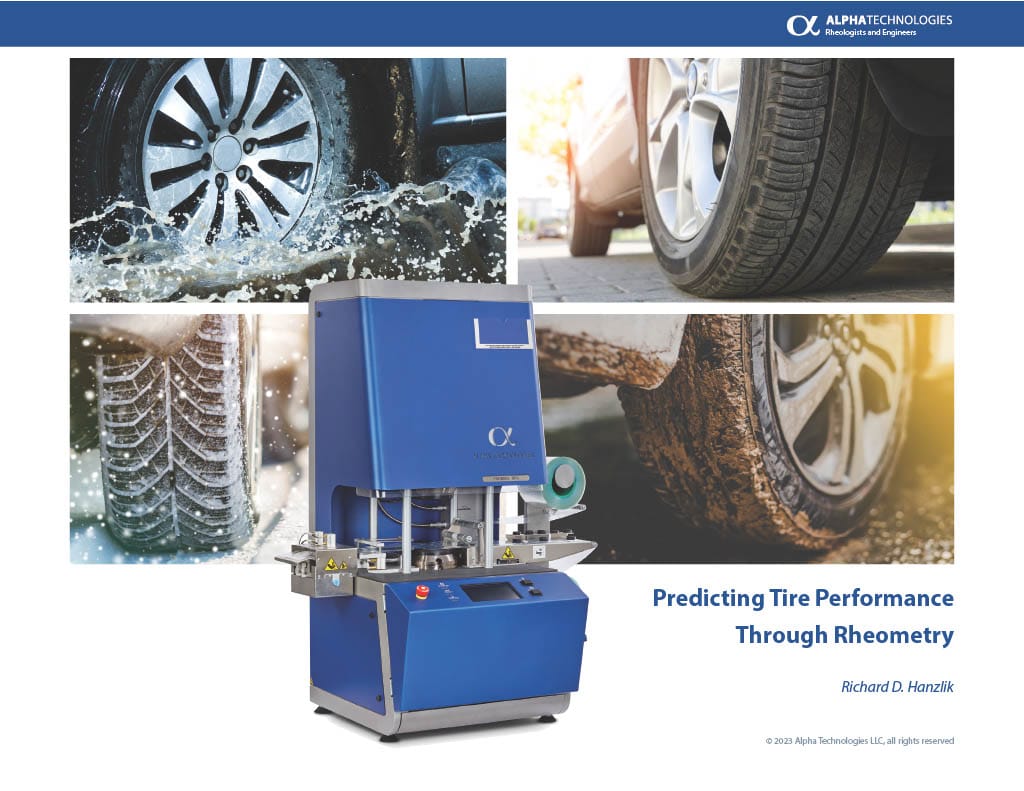
Download the eBook
Fill out the form to get Predicting Tire Performance Through Rheometry.