
Predicting Low Temperature Compression Set with a Rubber Process Analyzer (RPA)
Compression set is the permanent deformation remaining after the removal of a force applied to a rubber material. This study explores predicting low-temperature compression set by correlation with tan δ and with the % drop of stress relaxation measured on the Premier RPA Sub-Zero.
- Compression set is critical for machinery mountings, vibration dampers and seals
- Any reduction in cross section reduces force, the most common rubber product failure
- Low-temperature compression set matters in aerospace, oil & gas, food & dairy, automotive, medical and petrochemical applications
- Correlates compression set with tan δ and stress relaxation drop on the Premier RPA Sub-Zero, avoiding cumbersome traditional tests
Why Compression Set Matters
“Set” is used to characterize the viscous property due to which a rubber compound does not fully return to its original shape after removal of applied force. Compression set is a property that is typically determined for rubber used in machinery mountings, vibration dampers, and seals.
This property is a critical factor in rubber material selection because any reduction in the cross section of rubber material results in force reduction, the most common rubber product failure. In systems where there is significant thermal and pressure cycling, compression set can be a major risk factor.
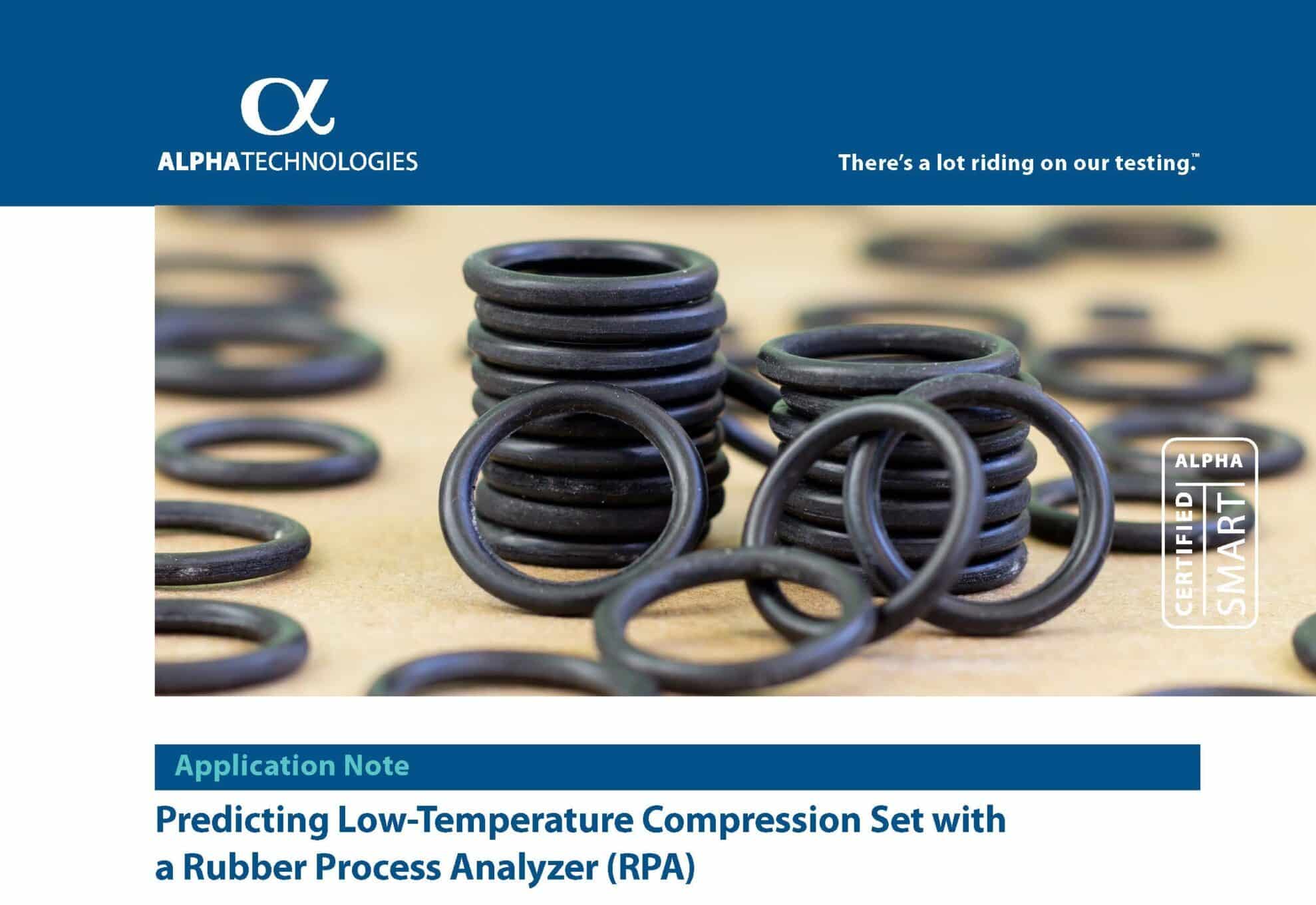
- Aerospace
- Oil & gas
- Food & dairy
- Automotive
- Pharmaceutical / medical
- Petrochemical, and many other industries
Traditional testing methods are very cumbersome, requiring not only special sample preparation, but also a specific testing instrument set-up.
This study explores the low temperature compression set of rubber compounds by correlation with the loss factor, tan δ, and with the % drop of stress relaxation measured with the Premier RPA Sub-Zero.
Download the application note
Fill out the form to get Predicting Low Temperature Compression Set with a Rubber Process Analyzer (RPA).